-
Roof Recover & Overlay in Erie, PA
Recover Roofing for Downtown Erie and Fairview's Multi-Tenant Buildings
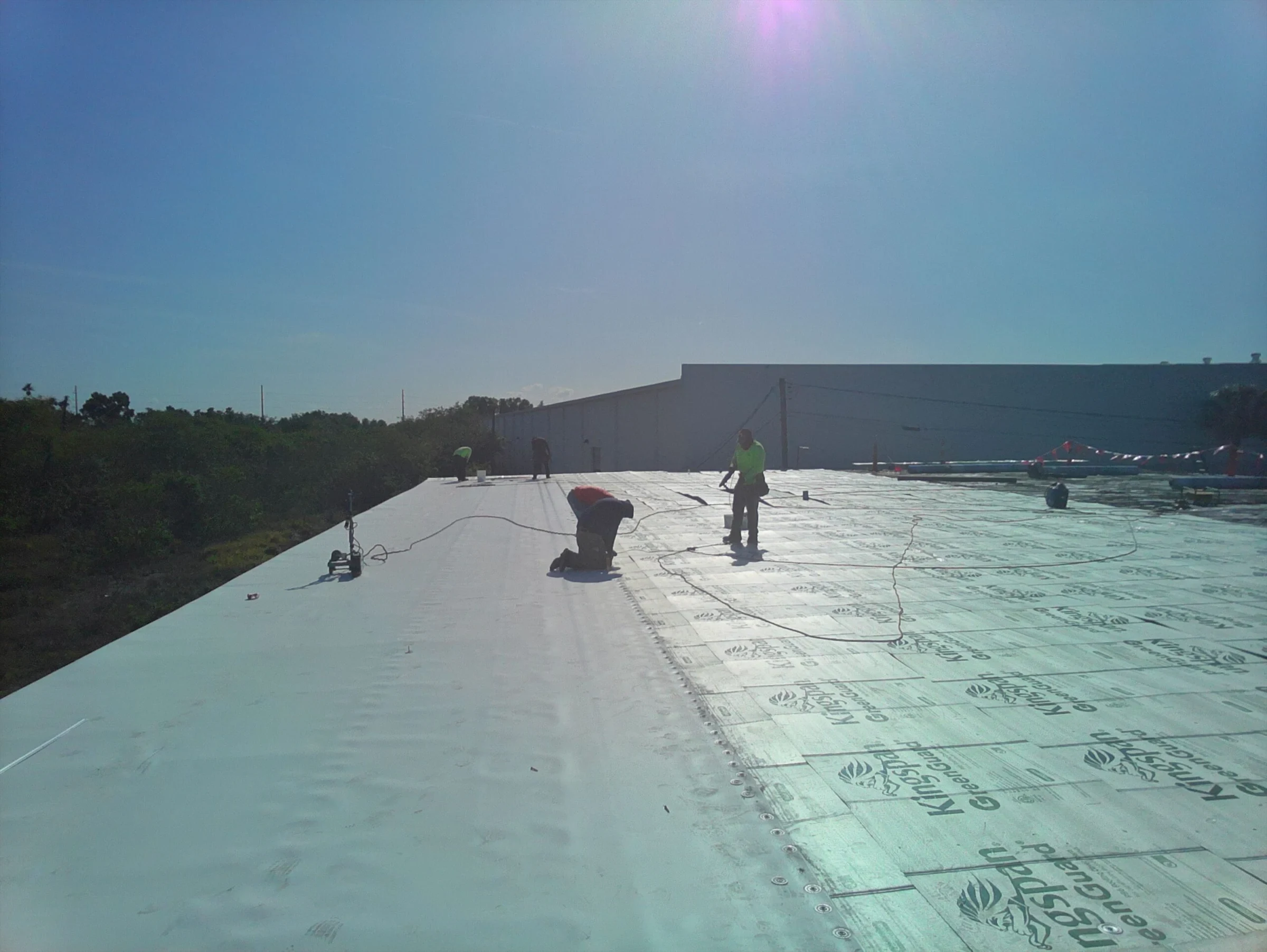
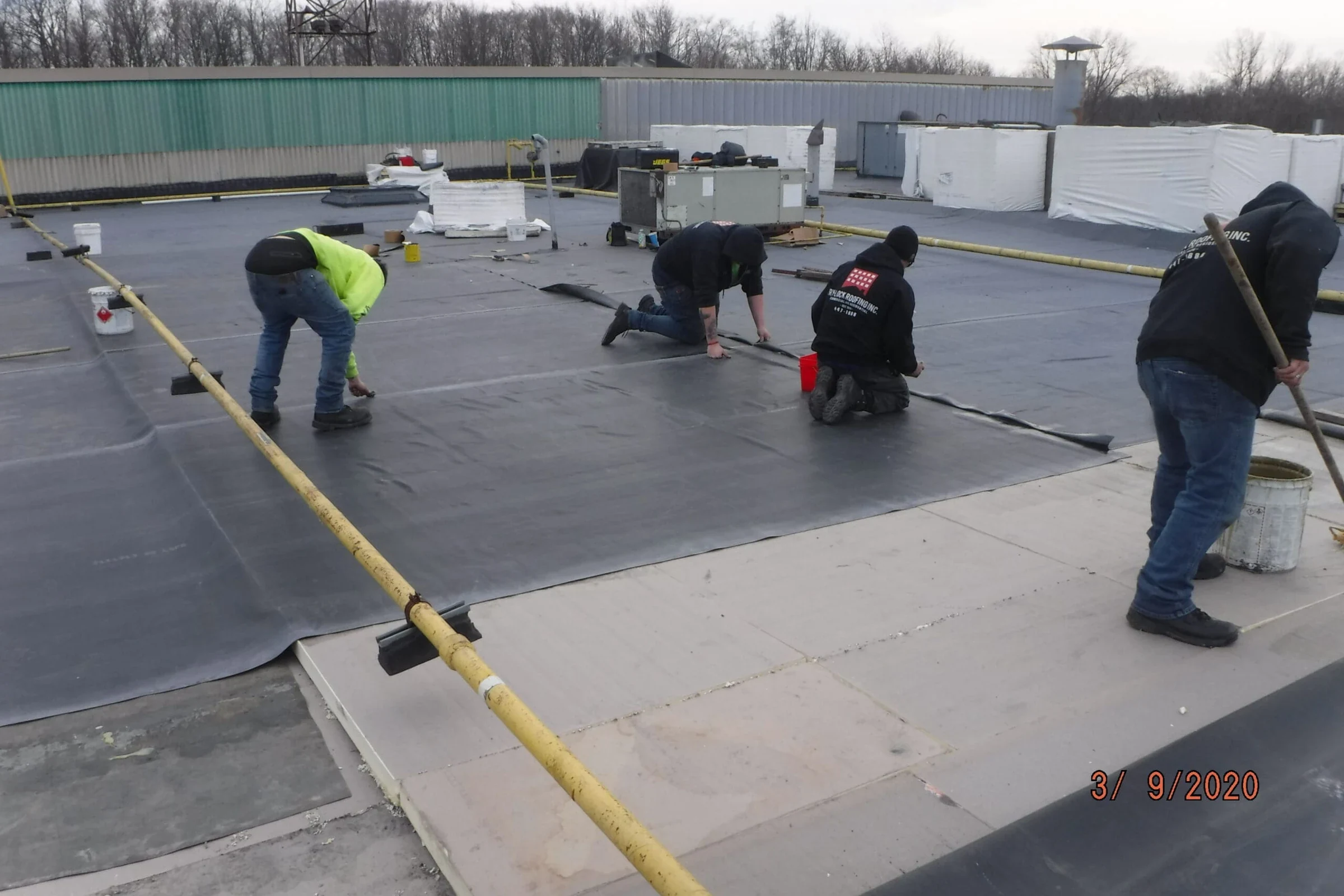
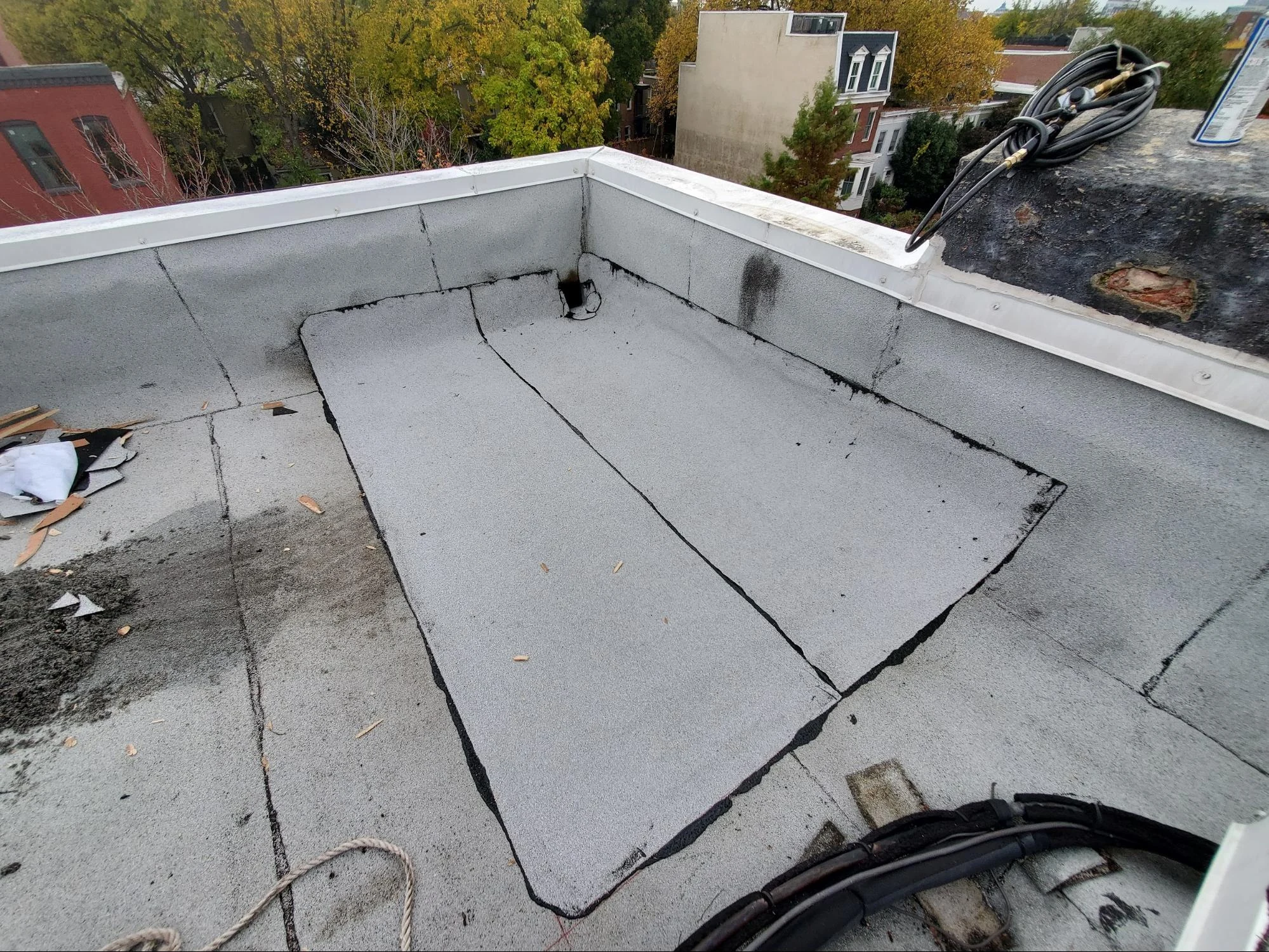
Plenty of the multi-tenant office and retail buildings around downtown Erie, Fairview's business park, and the Route 20 corridor through Girard have existing roofs with a sound deck and structure underneath a membrane that's simply reached the end of its useful life. Recover roofing — installing a new system directly over the old one rather than tearing it off — is often the right answer for that building type.
When Recover Makes Sense Over Tear-Off
A recover project only works when the existing deck is structurally sound and the insulation underneath isn't saturated with trapped moisture. We start every recover evaluation with a thorough moisture survey of the existing roof, because installing a new membrane over wet insulation just seals the problem in rather than solving it. On buildings where that survey comes back clean, recover roofing avoids the cost, disruption, and tenant downtime that a full tear-off brings to an occupied multi-tenant building.
For property managers running buildings with active leases and tenants who can't tolerate a roof that's open to weather during construction, that disruption avoidance is often as valuable as the direct cost savings.
Tapered Insulation: Fixing Drainage During the Recover
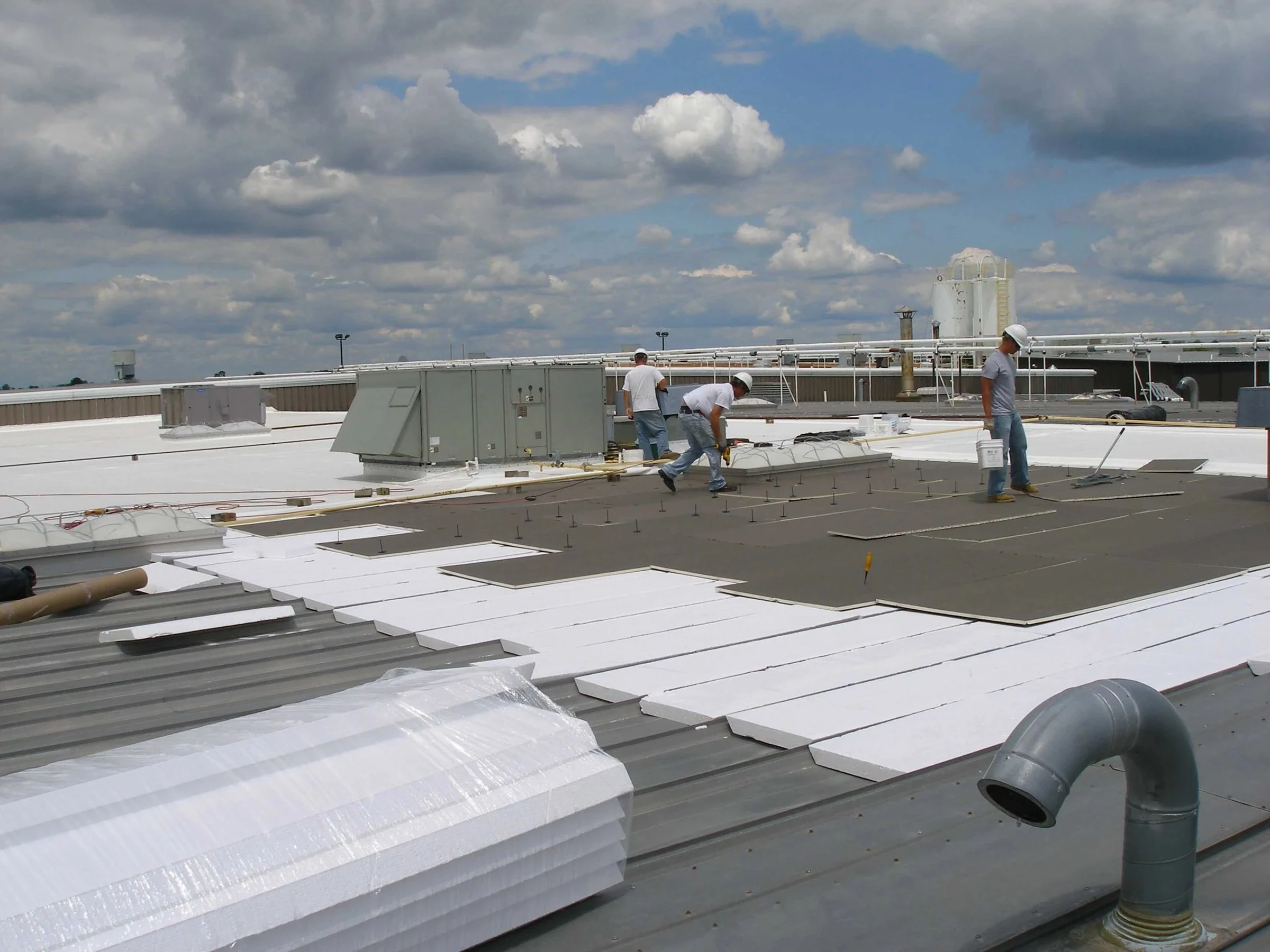
A recover project is the natural point to correct a roof's drainage rather than just covering up the old low spots. We install tapered insulation systems during the recover that build slope into areas that were flat or poorly draining under the original roof, directing water toward drains instead of letting it pond and refreeze through Erie's winter cycle.
That's a meaningful upgrade for buildings that have dealt with chronic ponding for years: the recover project fixes the drainage problem at the same time it replaces the worn membrane, rather than just putting a new surface over the same low spot.
Adding R-Value During a Recover
Because a recover project already involves building up a new insulation and membrane layer over the old roof, it's the most cost-effective point to add meaningful R-value to a building's envelope. On older downtown and Fairview buildings insulated to standards from decades ago, a recover project that bumps insulation thickness can noticeably cut winter heating costs for the building's remaining service life, since that added R-value works every day of a six-month heating season rather than sitting idle.
We size the added insulation to the specific building and its code requirements rather than defaulting to a minimum thickness, since the incremental cost of going a step thicker is usually small compared to what it saves in heating load over the life of the new roof.
Code Considerations for Multiple Roof Layers
Building code limits how many roof layers a structure can carry before a full tear-off becomes mandatory regardless of deck condition, and older downtown buildings sometimes already carry more layers than owners realize. We verify existing layer count and total assembly weight against code and structural capacity before proposing recover as an option, because a building that's already at its layer limit needs a different conversation.
Weight Considerations With Erie's Snow Load
Every recover project adds dead load to a roof structure, and that new weight sits on top of whatever snow load the building has to carry through winter. We calculate combined recover-assembly weight plus rated snow load before finalizing a recover design, which sometimes steers the insulation and membrane specification toward lighter-weight options on buildings where structural capacity is already a tight number.
Older downtown buildings with masonry bearing walls sometimes have less structural reserve than a modern steel-frame building of the same footprint, and we treat that difference seriously. A recover design that would be routine on a newer Fairview building might need a lighter insulation package or a different attachment method on a century-old downtown structure to stay within safe limits.
Where Recover Projects Fit Best
- Multi-tenant office buildings downtown and in Fairview's business park
- Retail centers along the Route 20 corridor through Girard
- Occupied buildings where tenant disruption is a major concern
- Roofs with sound decks but chronic drainage problems
- Buildings needing an insulation upgrade alongside membrane replacement
- Structures where structural capacity limits a heavier system
Common Recover Roofing Questions
How do you know if a roof is a good candidate for recover instead of tear-off?
A sound deck and dry insulation are the two requirements. We run a moisture survey first, and if the existing system passes, recover is usually the more cost-effective and less disruptive option.
Can a recover project fix a roof that's been ponding water for years?
Yes, that's one of the strongest reasons to choose recover over a simple re-cover-in-place. Tapered insulation installed during the project can correct the slope problem that caused the ponding in the first place.
Does adding a recover layer help with winter heating costs?
It can, meaningfully, since the project already involves adding a new insulation layer. Sizing that layer for real R-value gain rather than a bare minimum is where the heating savings come from.
Is there a limit to how many times a roof can be recovered?
Yes, building code caps total roof layers, and older buildings sometimes already carry more than owners expect. We verify layer count before proposing recover as an option.
Does a recover roof affect how much snow load the building can handle?
It adds dead load, so we calculate the new assembly weight against the building's rated snow load capacity before finalizing the design, adjusting material choice where that combined number gets tight.
Ready to review the roof scope?