-
Roof Drains & Scuppers in Erie, PA
Drainage Systems Built for Erie's Snow and Thaw Cycle
A low-slope roof lives or dies by its drainage. We repair, replace, and reconfigure roof drains and scuppers on commercial buildings across Erie, sizing systems for the snow load and rapid spring thaw that make this region's drainage math different from a market with rain alone.
Drainage Math for Flat Roofs Under Erie's Snow Load
Drain sizing on a low-slope roof usually gets calculated against a rainfall design event, but that number doesn't capture what happens when a roof carries weeks of accumulated snow and then sees a fast melt. We check whether existing drainage was ever sized with that scenario in mind, because a lot of older commercial roofs here were designed decades before anyone thought carefully about lake-effect melt volume.
Undersized primary drainage puts more load on secondary drains or scuppers than they were built to handle, and if those overflow paths are also undersized or blocked, water has nowhere to go but up against the roof edge and parapet.
Internal Drains vs Scuppers: What Works on Erie's Older Building Stock
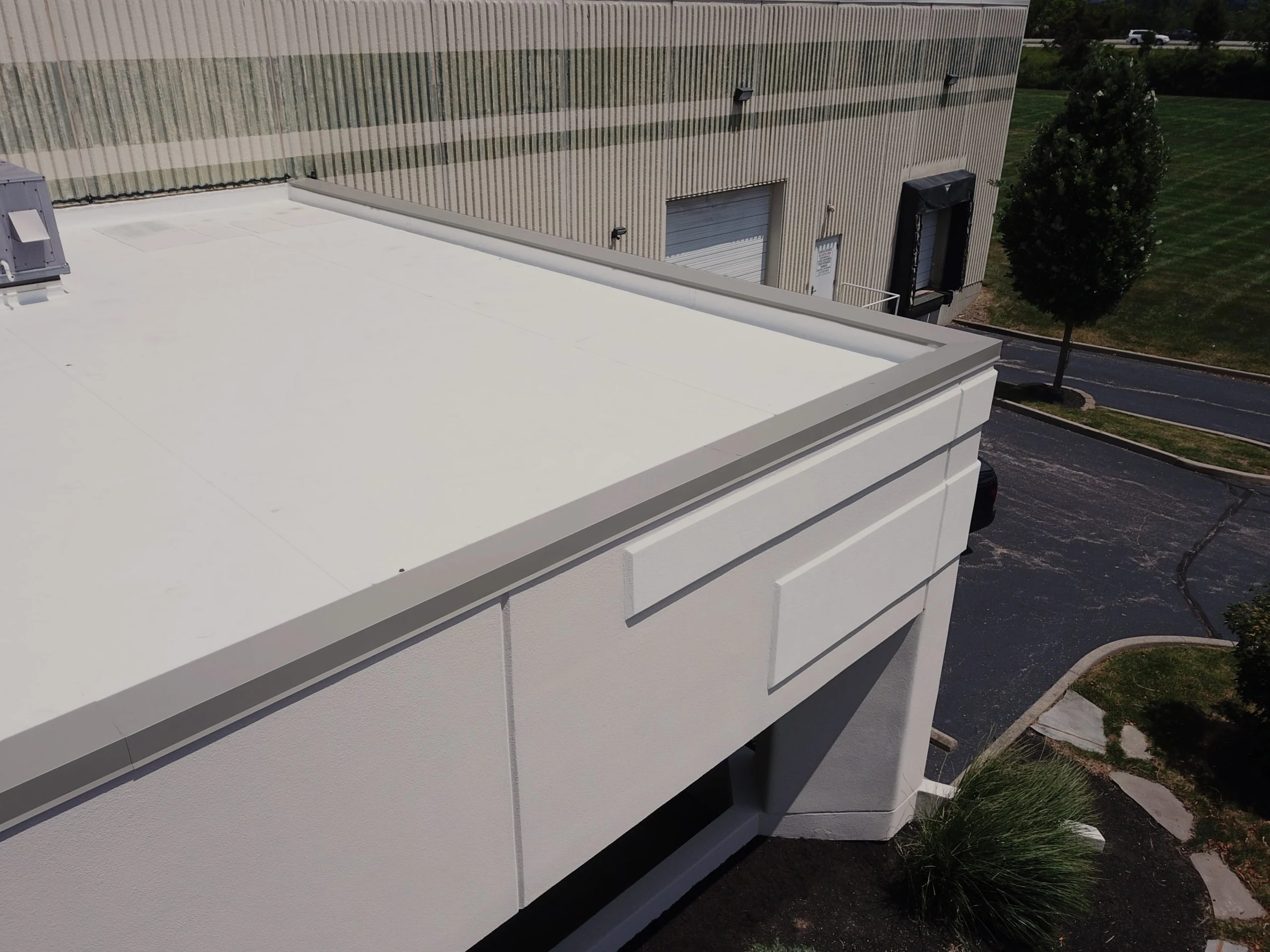
Internal drains route water through the building's interior plumbing, which works well on larger footprint buildings but is more vulnerable to freeze-related blockage in the drain leader itself if it runs through an unconditioned space. Scuppers route water straight through the parapet wall to an exterior downspout or splash area, avoiding interior freeze risk but requiring enough parapet height and proper flashing to work reliably.
A lot of Erie's older commercial buildings use a mix of both, added and modified over decades of ownership changes and additions. We map the existing drainage layout before recommending changes, since a system that looks inconsistent on paper sometimes actually works fine once you understand how the roof was built up over time.
Ice Blockage in Drains During Freeze-Thaw Swings
A drain that's partially frozen doesn't fail all at once. It just handles less volume than it should, and nobody notices until a fast thaw or heavy rain overwhelms the reduced capacity. Ice can form in drain bowls, strainers, and even down in the leader pipe if heat trace isn't present or isn't working on an exterior run.
We check for ice blockage risk as part of winter and early-spring maintenance visits, since this is one of the failure modes that's easy to miss during a summer inspection when the same drain is running clear.
The Spring Thaw Surge: Why April Is Often When Drains Fail
A slow winter melt rarely overwhelms drainage, but a sudden warm stretch after a heavy lake-effect winter can send more water across a roof in a few days than the drains saw in the entire preceding season. That's when undersized, partially blocked, or poorly maintained drainage systems show their limits, usually as ponding or overflow at a roof edge that wasn't a problem in any other season.
We schedule a specific drain-clearing and function check ahead of the typical spring thaw window, separate from the general fall and spring maintenance visits, on buildings where drainage has been marginal in past years.
Roofs with tapered insulation that was designed decades ago sometimes have low points that have shifted slightly as the building settled or as prior repairs added material unevenly. A drain that was once the true low point of a roof section can end up slightly higher than a spot ten feet away, which means water ponds somewhere the original design never intended it to collect. We check for this kind of drift during a drainage evaluation, since it's a common and often overlooked reason a roof ponds even with functioning drains.
Ponding Water and Its Effect on Insulation R-Value Over Time
Standing water on a roof doesn't just stress the membrane. It also cools the roof assembly in a way that changes how insulation performs, and over years of repeated ponding, saturated insulation loses R-value permanently even if the membrane above it never actually leaks. That's a slow, invisible cost that shows up as a gradually rising heating bill rather than an obvious roof problem.
Warning signs worth checking after any storm or thaw event:
- Standing water still visible more than forty-eight hours after a storm
- Discoloration or algae growth around low points on the membrane
- Overflow marks or staining below scupper openings
- Ice buildup inside drain bowls during winter checks
- Gurgling or slow-draining sounds from interior plumbing after rain
- Sagging membrane at low points indicating structural deflection
- Debris accumulation at drain strainers during routine walks
Drainage Questions From Erie Building Owners
How much ponding water is actually a problem?
Some minor ponding after a storm is normal and clears within a day or two. Standing water that persists for several days indicates a drainage or structural issue worth investigating.
Can you add scuppers to a roof that only has internal drains?
In some cases, yes, if the parapet height and structure allow it. We evaluate the existing system before recommending an added overflow path.
Why do our drains work fine in summer but overflow in spring?
Spring thaw volume from accumulated winter snow can exceed what the system handles during normal rainfall, especially if a fast warm-up sends a lot of melt across the roof at once.
Do clogged drains actually shorten roof life?
Yes. Prolonged ponding stresses the membrane and can gradually reduce insulation performance beneath it, even before an actual leak develops.
How often should drains be cleared?
We include drain clearing in every scheduled maintenance visit, with an added check before the typical spring thaw window on buildings with a history of marginal drainage.
Ready to review the roof scope?