-
Storm Damage Roof Repair in Erie, PA
Repairing Erie Commercial Roofs After Wind, Snow, and Hail
Erie sits in one of the heaviest lake-effect snow bands in the country, and wind off Lake Erie adds uplift stress that inland buildings never see. We repair storm damage on commercial roofs across the region, from wind-torn membrane to snow-load related failures.
The Christmas 2017 Lake-Effect Storm and What It Taught Erie Owners
In late December 2017, a persistent lake-effect band dropped several feet of snow on parts of Erie County over just a few days, one of the most extreme single-storm totals the region has recorded. Roofs with adequate drainage and structurally sound decking came through it; roofs with undersized drains, aging structure, or existing insulation problems didn't fare as well.
That storm is still a useful reference point when we talk to owners about roof capacity. It's a real example of what an extreme lake-effect event actually delivers, and it's part of why we don't design drainage or evaluate structural load against an average winter. We design against what this region has already proven it can produce.
Wind Damage Patterns Along the Bayfront and Inland
Buildings closer to the lakefront take wind uplift differently than buildings further inland, with higher sustained gusts and less terrain to break up the wind before it hits a roof edge. We see membrane lift and edge metal failure concentrated at corners and parapets more than in the open field of the roof, which is a predictable pattern once you've seen enough wind damage.
Inland buildings aren't immune. A strong frontal system can still deliver damaging gusts well past the immediate lakefront, but the intensity and frequency of wind events drops off somewhat the further a building sits from open water.
Hail and Ice Impact on Membrane and Metal
Hail is less frequent here than in some inland markets, but when it hits, it can bruise membrane, dent metal edge and coping, and crack aged pipe boots and sealants. Ice is the more consistent threat — falling ice from taller adjacent structures, or ice buildup at parapets that cracks brittle membrane as it expands.
We inspect for both types of damage after any significant storm, since hail bruising in particular doesn't always show up as an active leak right away. It weakens the membrane in a way that shows up as a leak months later, after enough freeze-thaw cycling works at the compromised spot.
Assessing Structural Load After Heavy Snow Events
A heavy lake-effect accumulation adds real weight to a low-slope roof, and drifting against parapets or rooftop equipment can concentrate that load well beyond what an even snow layer would suggest. After a major snow event, we check for visible deflection, listen for reports of unusual roof noises from occupants, and look at drainage to confirm melt isn't ponding faster than the roof can shed it.
Signs we tell owners to watch for after any major storm:
- Membrane lifted or torn at roof edges and corners
- Dented or displaced edge metal and coping sections
- Visible ceiling stains appearing shortly after a storm
- Cracked or split pipe boots and pitch pockets
- Standing water that hasn't drained days after a storm
- Debris or tree limbs on the roof surface after high wind
- Unusual sagging or noises reported by building occupants
Repair Sequencing After a Storm Hits Multiple Buildings at Once
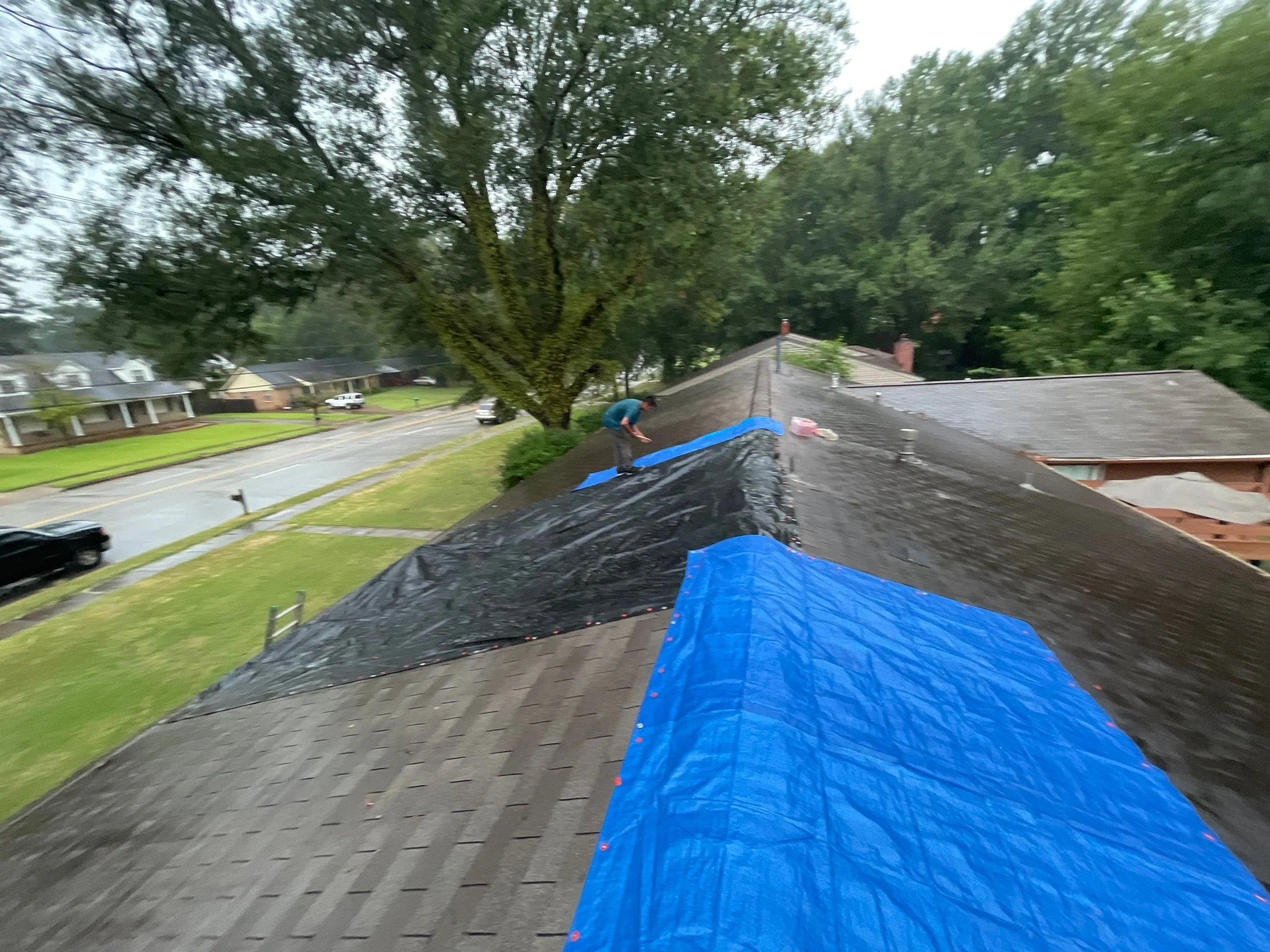
A regional storm doesn't damage just one roof. It usually generates emergency calls across several buildings at the same time. We triage by severity, prioritizing active water intrusion over roofs with cosmetic or minor damage, and communicate realistic timelines rather than promising every call gets handled first.
For owners managing multiple properties, we can coordinate a single assessment pass across the portfolio so damage gets documented consistently and repair priorities get set based on actual severity rather than who called first.
Material availability also shifts after a regional event, since every roofing contractor in the area is drawing from the same regional supply of membrane, insulation, and edge metal at the same time. We plan around that reality by securing materials early for confirmed repairs and communicating honestly with owners when a specific product is on backorder rather than letting a delivery delay become a surprise.
Storm Repair Questions Erie Owners Ask
How do I know if storm damage is serious enough to call right away?
Any active water intrusion, visible membrane tears, or displaced edge metal warrants an immediate call. Less obvious damage like hail bruising is worth a scheduled inspection even without an active leak.
Will you document the damage for insurance purposes?
Yes, we photograph and document conditions as part of any storm-related visit, and we can organize that record to fit whatever process your insurer requires.
How does the 2017 storm compare to a typical Erie winter?
It was an extreme event, well beyond an average season's snowfall, but it's a real benchmark for what this region's weather can produce, which is why we don't design roof drainage or structural expectations around an average year alone.
Can wind damage a roof without any visible tear?
Yes. Uplift can loosen fasteners and open seams without an obvious tear, which is why we check edge and seam attachment even on roofs that look intact after a wind event.
Do you handle repairs for multiple buildings hit by the same storm?
Yes, and we prioritize by damage severity across the group rather than working strictly in the order calls came in.
Ready to review the roof scope?