-
Warehouse Roofing in Erie, PA
Warehouse Roofs Sized for Lake-Effect Snow Across Wide Open Spans
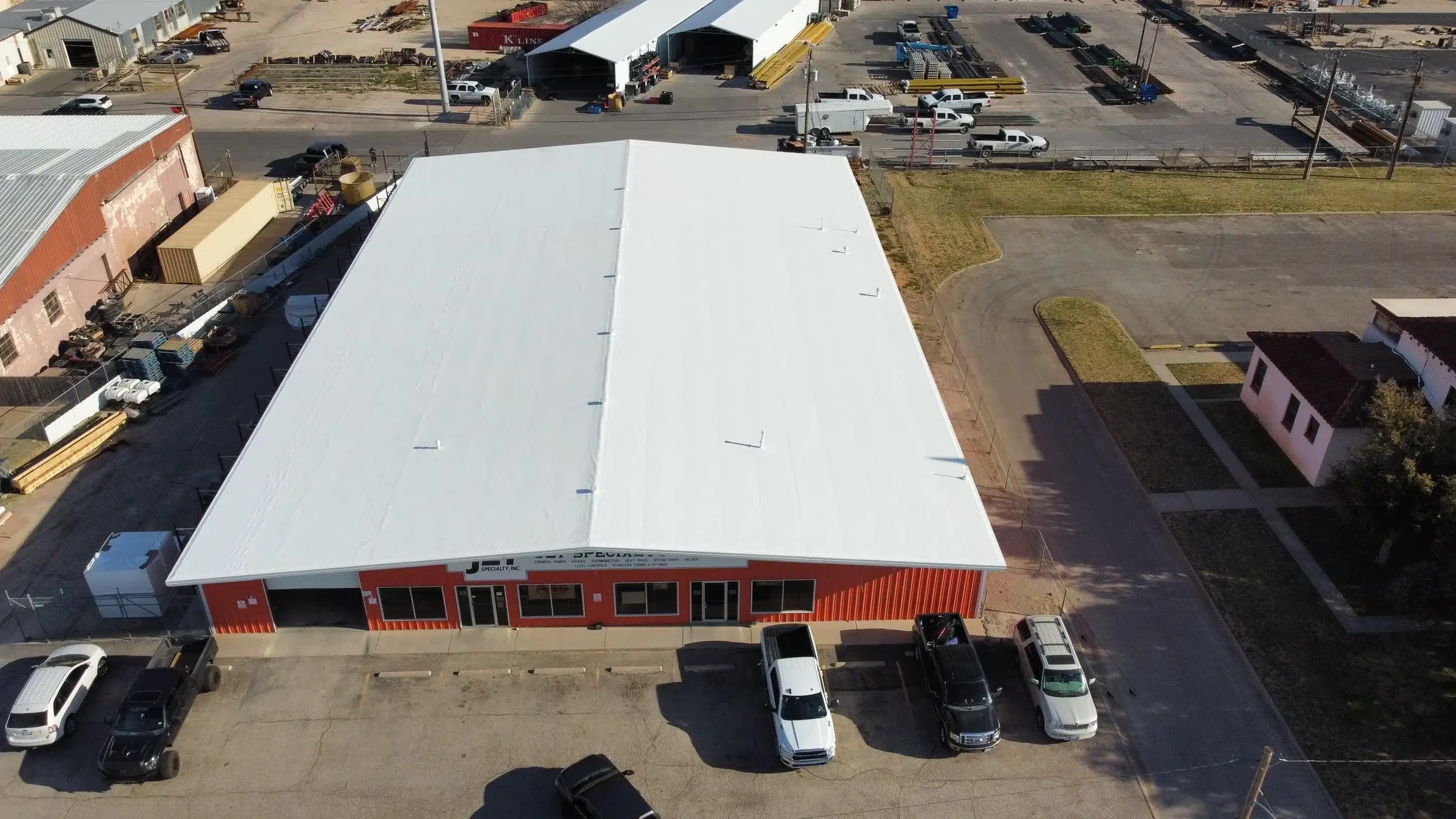
The distribution buildings strung along Route 20 and back into the Peach Street corridor carry some of the widest unbroken roof fields in the market, and most of them were built to a minimal insulation spec because the space below was never meant to be heated much past keeping product from freezing. Erie's lake-effect snow bands don't care what the space below is used for, and a warehouse roof with too little insulation loses heat fast enough to melt snow unevenly, which is where a lot of ice dam and drainage problems on these buildings actually start.
Unconditioned Space, Uneven Snowmelt
A warehouse held a few degrees above freezing for product protection still loses enough heat through an underinsulated roof to melt the underside of a snow load, even when the space feels cold to a person standing in it. That meltwater runs down under the snowpack toward the eaves and drains, where it refreezes into ice that blocks the drainage path for the next melt cycle. On a roof this size, a blocked drain during a warm spell after a heavy lake-effect event can back up water across a large section of membrane before anyone on the ground notices.
We check insulation continuity across the field specifically for this pattern — cold spots and thermal bridges show up as irregular melt patterns in the snow that are visible from ground level after a storm, and they usually point to compressed insulation or a gap that formed during an earlier repair.
Drift-Loaded Corners Along the Route 20 Frontage
Lake wind pushes snow into drift patterns that pile several feet deep against parapets and rooftop equipment screens on the windward corners of these buildings, adding structural and drainage load well above what an even-coverage snow calc would show. We look at drift accumulation specifically at corners and parapet returns facing open exposure toward the lake, since that's where fastening and flashing details take the heaviest cumulative load through a normal Erie winter rather than wherever a generic uplift chart happens to flag.
Fastener spacing and flashing detail at those drift-loaded returns get sized for the accumulated weight a full winter can pile up, not the lighter, evenly distributed load a standard snow table assumes for the rest of the field.
- Standing water still visible two or more days after a melt or rain event
- Snow cover melting unevenly across the field, exposing insulation gaps from the ground
- Ice built up at drains or scuppers following a freeze-thaw cycle
- Blistering or fishmouthing membrane anywhere across the open field
- Drains too small or too rusted to keep pace with a roof this size
- Fasteners working loose along the parapet and corner zones
What Insulation Upgrade Actually Buys a Warehouse
Because most warehouse space isn't heated to office comfort levels, the energy-cost case for insulation upgrades here is less about a dramatic utility bill drop and more about protecting stored product and controlling the ice-dam cycle that damages membrane and drains over time. Buildings that do maintain a heated zone — climate-sensitive storage, packaging areas, or a portion converted to light assembly — see a more direct utility payback from added roof insulation, since heat loss through an underinsulated roof over a heated warehouse zone is a bigger share of total loss than most facilities managers expect.
When we're already opening the roof for a recover, adding insulation beyond code minimum on a heated section usually pays for itself faster than on the unconditioned portion, so we scope insulation thickness by zone rather than applying one blanket spec to the whole field.
What Sits Under the Roof Sets the Repair Priority
Product sitting two or three levels up on steel racking doesn't care how minor a leak looks from the office below — water finds its way down through every level before anyone spots the stain. Rather than run every warehouse roof through the same inspection cadence, we map which sections sit over high-value or climate-sensitive storage and put those on a tighter check schedule, especially heading into the season's first heavy lake-effect band, when drift load and meltwater risk both spike at once.
Working the Roof Without Stopping the Dock
A distribution building's dock doors don't get a day off for a reroof, so we build the access plan around your loading schedule instead of asking operations to work around us. Material and lift staging get positioned clear of active doors, and we sequence which roof sections come off on which day so the crew is never working tear-off directly above a door that's mid-shift loading. On a building running multiple shifts, we walk the dock schedule with your operations lead before mobilization so nobody's guessing which doors are live on a given morning.
Deciding Between Recover and Tear-Off on a Field This Wide
A moisture scan is the only honest way to answer the recover-versus-replace question on a roof this size, since the visual condition of the membrane surface doesn't tell you what's happening in the insulation layer underneath it. Dry insulation under sound membrane is a strong recover candidate, and recovering lets us add insulation value across the field for a fraction of a full replacement's cost. Wet insulation changes the math completely; no amount of surface-level savings makes recovering over saturated insulation the right call, since doing so just seals the moisture in place.
When full replacement is the answer on a field this wide, we typically split it into phases that follow the building's existing drainage zones rather than pushing through the entire roof in one mobilization, which lets ownership spread the capital cost across budget cycles without leaving a partially finished roof exposed mid-project.
What Warehouse Operators in This Market Ask Us
Does insulation upgrade make sense on an unheated warehouse?
It depends on the zone. A fully unconditioned bay sees limited utility payback, but sections held above freezing for product protection, or any area converted to heated use, usually justify added insulation during a recover.
What's causing ice to build up at our drains every winter?
Almost always an insulation gap or thermal bridge letting heat escape unevenly, melting snow from below in a pattern that refreezes right at the drain. A moisture scan and thermal check can confirm where it's coming from.
Will our loading dock have to shut down during the reroof?
No. We plan staging and tear-off sequencing around your active doors rather than close the dock, and we confirm the shift schedule with your operations lead before the crew shows up so nothing gets scheduled over a door that's in use.
How do you know if our existing roof is even worth recovering?
A moisture scan is the deciding factor, not a visual walk. It maps exactly where insulation has taken on water, which tells us honestly whether recover is a real option or whether that section needs to come off.
How often does a roof this size need to be checked?
Twice yearly at minimum, with an added walk after any heavy lake-effect band, since drift accumulation and uneven meltwater are both worth catching before they turn into a drain backup.
Ready to review the roof scope?