-
Big-Box Retail Roofing in Erie, PA
Big-Box Roofs Carrying a Sales Floor's Worth of Heating Load
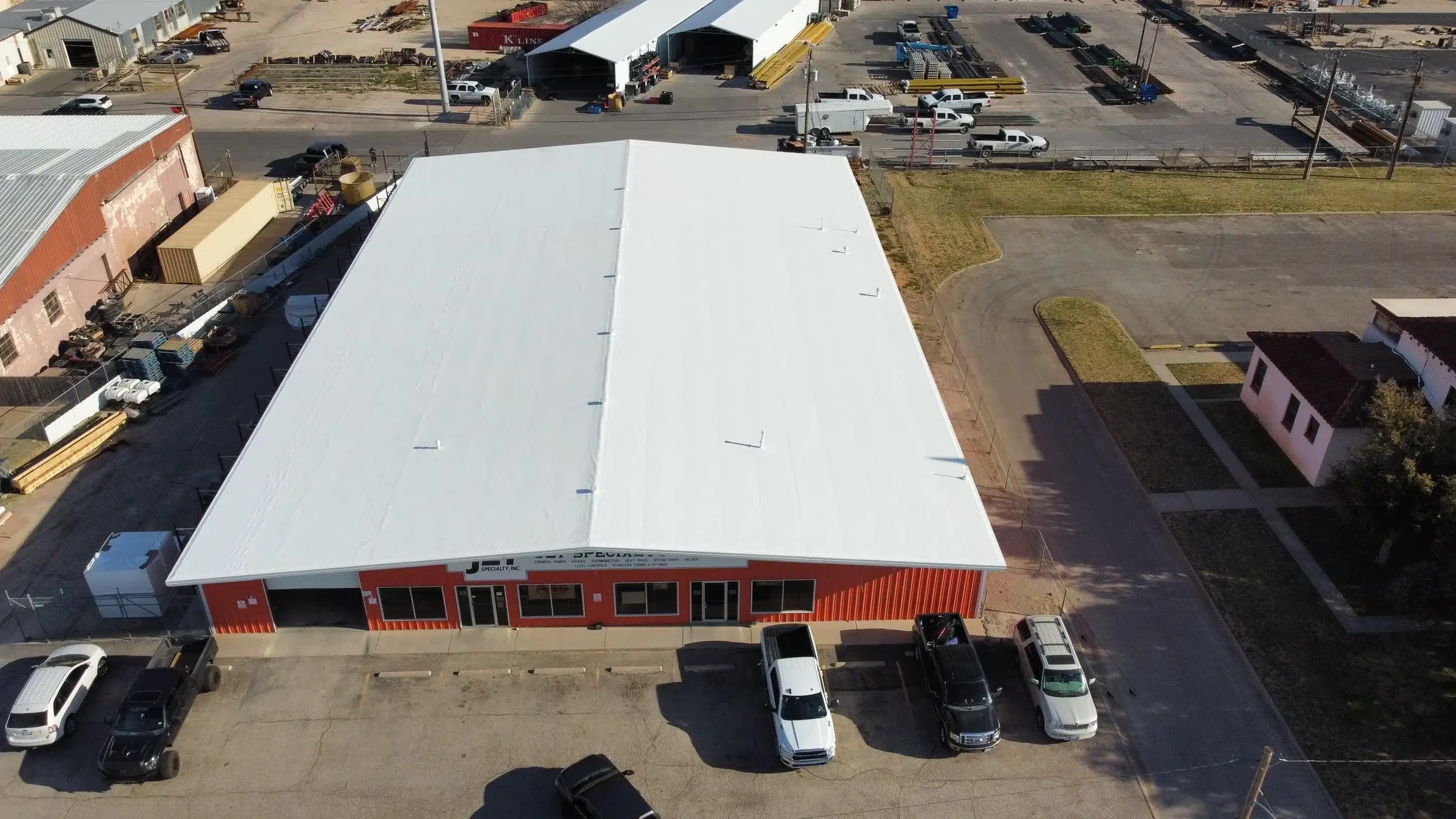
The anchor stores around the Millcreek Mall and strung along Peach Street through Summit Township run some of the largest flat roof fields in the market, sitting over open sales floors that need to stay comfortable for shoppers year-round while a dense row of rooftop HVAC units works to condition far more open volume than a typical office or warehouse of similar footprint. Erie's long heating season makes the insulation performance under that roof field a bigger factor in the annual utility number than most retail operators expect from a roof they rarely think about.
A Sales Floor Isn't a Warehouse, Even Under a Similar Roof
Big-box retail shares a lot structurally with warehouse construction, wide clear spans and a low-slope membrane, but the space below is held at full comfort temperature for customers rather than a few degrees above freezing for product protection. That difference means insulation performance on a big-box roof carries a more direct utility-cost impact than the same square footage over an unconditioned warehouse, and it's the first thing we point out when a retail facilities team assumes their roof needs match a distribution building down the road.
Rooftop Unit Density Across a Wide Field
A big-box store typically runs a long row of packaged rooftop units spaced across the field to condition the sales floor evenly, and each curb interrupts insulation continuity and creates a flashing detail that has to handle unit vibration and seasonal maintenance traffic. On a roof this size, the cumulative insulation loss across dozens of curb penetrations adds up to a meaningful share of total heat loss, which is part of why we scope curb flashing condition as closely as we scope the open field membrane during an assessment.
- Ponding water persisting more than two days after a rain or snowmelt event
- Cold spots reported near the sales floor perimeter closest to the roof edge
- Ice damming at parapets facing open exposure along Peach Street
- Membrane wear concentrated along the row of rooftop unit maintenance paths
- Rusted or undersized drains not keeping pace with the roof's total field size
- Fastener backout at corners and perimeter zones exposed to open wind
Wind Exposure Along an Open Retail Corridor
Big-box stores set back from the road behind large parking fields, like much of the retail along Peach Street and Route 20, sit more exposed to open wind than a building tucked into a denser commercial block. That exposure changes fastening pattern requirements at the perimeter and corners, and we calculate uplift zones against the specific building's actual site exposure rather than a generic retail default, since a store at the edge of a large parking field sees real wind loading that an interior mall-attached space doesn't.
Snow Load and Rapid Melt on a Field This Large
Lake-effect snow bands can drop a foot or more on a big-box roof field in a single event, and the sheer size of that field means drainage capacity has to handle a large volume of rapid melt whenever a warm spell follows a heavy snow event, which happens often enough in this market to plan for as a routine condition rather than an edge case. We check drain and scupper capacity against actual accumulation patterns for the site, including how snow drifts around rooftop units and taller equipment enclosures rather than assuming it distributes evenly across the field.
Insulation Upgrades During a Recover Pay Back on Volume
Because a big-box roof is conditioning open interior volume at full comfort temperature through a long heating season, insulation thickness added during a recover tends to show a faster utility payback here than on an unconditioned building of similar size. We price insulation upgrade options alongside the base recover scope specifically so retail facilities teams can weigh the incremental cost against a real energy-savings projection rather than defaulting to the minimum code requirement.
Minimizing Disruption to an Operating Store
A big-box store doesn't close for a reroof, and staging material and equipment access has to work around parking lot traffic, loading dock deliveries, and store hours rather than around a building sitting empty. We sequence work by roof section and coordinate staging with store management so customer parking and receiving stay functional through the project, with the noisiest phases scheduled for hours that minimize impact on the sales floor below.
Questions Retail Facilities Managers Ask Us
Does insulation upgrade really pay back on a big-box roof?
Usually faster than on a comparable unconditioned building, since the sales floor below is held at full comfort temperature through the entire heating season rather than a few degrees above freezing.
How do you keep the store open during roof work?
We sequence work by section, coordinate staging around parking and delivery traffic, and schedule the loudest phases for hours that minimize disruption to the sales floor.
What's causing ponding near our loading dock addition?
Often a drainage conflict from an addition tying into the original roof without matching the slope plan. Tapered insulation at the low point usually solves it without a full regrade.
How often should a roof this size be inspected?
Twice yearly, plus after any significant lake-effect snow or wind event, with extra attention to the rooftop unit row where insulation and flashing wear shows up first.
Can a moisture scan tell us if recover is a real option?
Yes. An infrared or capacitance scan shows exactly where insulation has already absorbed water, which tells us whether a recover extends service life or whether tear-off is the responsible path.
Ready to review the roof scope?