-
Edge Metal, Coping & Gutters in Erie, PA
Perimeter Metal Work on Erie's Wind-Exposed Roofs
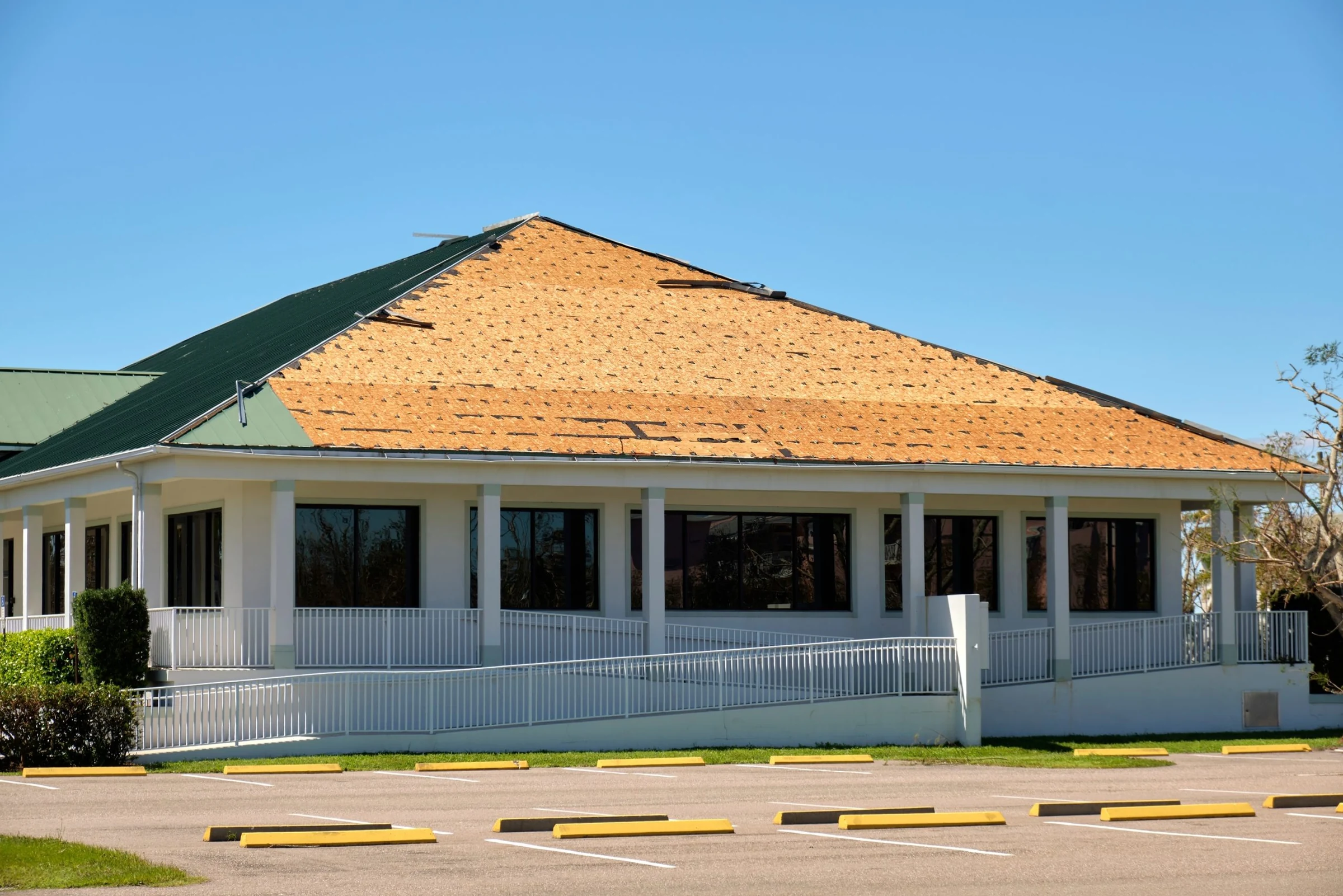
Roof edges, parapet coping, and gutters take more punishment than the field membrane on most commercial buildings, especially here where wind off Lake Erie hits perimeter details hardest. We repair and replace edge metal, coping, and gutter systems across Erie's commercial building stock.
Why Edge Metal Fails First on Erie Roofs
Wind uplift concentrates at roof corners and edges more than anywhere else on a low-slope roof, and edge metal is the detail standing directly in that wind's path. A fastening pattern that's adequate on an inland building in a calmer wind zone can come loose here faster than the field membrane ever would, which is why we treat edge and corner attachment as a separate design problem from the rest of the roof.
Once an edge metal section works loose, it doesn't just fail on its own. It exposes the membrane termination behind it to wind and water, which is often how a roof leak starts even though the actual damage began at the metal, not the membrane.
Coping Details on Parapet Walls Around the City
Buildings with parapet walls — common on the older commercial stock downtown and around the medical and institutional buildings near the UPMC Hamot campus — rely on coping caps to keep water out of the wall assembly below. A coping joint that's opened up or a cap that's lost its slope lets water into the parapet, where it can travel down into the wall or back under the membrane.
We check coping seams, end dams, and cleat attachment as part of any perimeter inspection, since a coping failure often shows up as a wall stain or interior leak that gets misdiagnosed as a membrane problem when the actual source is at the top of the parapet.
Gutter and Downspout Sizing for Lake-Effect Snowmelt
A gutter and downspout system sized for an average rain event can be badly undersized for the volume that comes off a roof during a fast spring thaw after a heavy lake-effect winter. We size gutter capacity and downspout count against the roof's actual drainage area and the kind of melt volume this region produces, not a generic sizing chart built for rain alone.
Undersized or clogged gutters back water up at the roof edge, which puts pressure on the same edge metal and termination details that are already fighting wind uplift. Drainage and edge metal performance are connected, not separate problems.
Fastening Patterns That Hold Against Off-Lake Gusts
We use fastening spacing and cleat systems designed for the uplift pressures documented for this wind zone, not a minimum-code pattern that assumes a calmer environment. On buildings closer to open water, that often means tighter fastener spacing and heavier gauge metal than what a generic specification would call for.
Signs that edge metal or gutter systems are already failing include:
- Metal panels lifted, bent, or separated at seams
- Fasteners visibly backed out or missing at cleats
- Coping caps with open joints or missing end dams
- Rust or corrosion at fastener penetrations
- Gutter sections pulling away from fascia or edge
- Standing water or ice buildup in gutter troughs
- Membrane termination visible or exposed behind loose metal
Metal Choices and Finish Life in Freeze-Thaw Cycles
Repeated freeze-thaw cycling works at metal finishes and seams more aggressively than a steady climate would, so we favor heavier gauge metal and finishes rated for this kind of cycling on edge, coping, and gutter work here. A lighter gauge system might install faster and cost less upfront, but it also tends to be back on our repair schedule sooner in a market with this many freeze-thaw cycles per winter.
We also account for galvanic compatibility between metal types where gutters, downspouts, and edge systems meet, since mismatched metals in a wet, freeze-thaw environment corrode faster than a properly matched system.
Color and finish selection matters for more than appearance on a building with visible parapet lines from the street. We walk owners through finish warranty terms alongside the structural specification, since a finish that chalks or fades early on a building near downtown or a high-visibility retail corridor becomes a maintenance conversation of its own, separate from whether the metal itself is still performing its job.
Edge Metal and Gutter Questions We're Asked
How often should edge metal be inspected?
We check it as part of every roof inspection and maintenance visit, since it's one of the highest-risk failure points on a roof exposed to lake wind.
Can you repair a section of edge metal without replacing the whole run?
Often yes, if the damage is localized and the surrounding metal is still sound. We assess the full run before recommending a spot repair versus a full replacement.
Why do our gutters overflow during a spring thaw even though they handle summer rain fine?
Spring thaw volume from a winter's worth of accumulated snow can exceed what the gutter system was sized for if it was designed around rainfall alone rather than melt volume.
Does coping failure always show up as a roof leak?
Not always. It can show up as a wall stain or interior damage at the parapet level before it ever looks like a typical roof leak, which is why it gets misdiagnosed sometimes.
What metal gauge do you recommend for Erie's climate?
It depends on the building's wind exposure and budget, but we generally recommend heavier gauge material than a minimum-code spec for buildings with direct lake exposure.
Ready to review the roof scope?