-
Industrial Flex Space Roofing in Erie, PA
One Roof, Several Tenants, Several HVAC Loads
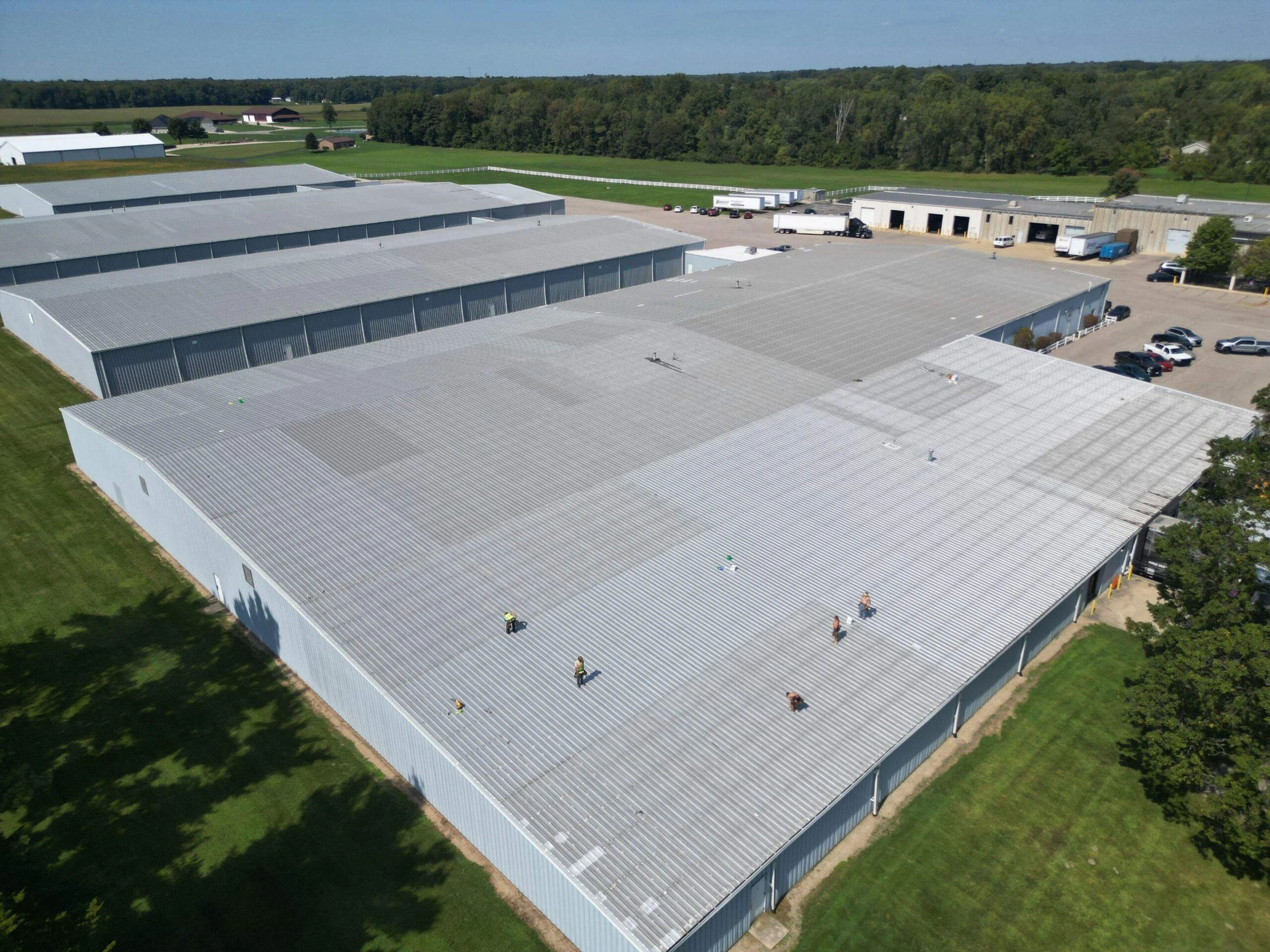
The flex parks around Fairview and Harborcreek hold a mix of light manufacturing, warehouse-office combos, and small assembly operations under roofs that were often built for a single use and later divided into bays with very different energy needs. A tenant running injection molding equipment and a neighbor running a quiet parts-distribution office share a roof deck, but not a heating or cooling load, and that mismatch is where a lot of flex space roofing problems start.
Zoned Insulation Where Zoning Wasn't Original
Most flex buildings weren't designed with per-tenant thermal zoning in mind, so when a bay gets subdivided for a new lease, the roof above it is still working off the original building-wide insulation spec. A bay converted to conditioned office space needs roof insulation performance that the adjacent warehouse bay next door never required, and running the whole roof at one uniform R-value either overspends on the low-need bays or underperforms on the high-need ones.
When we're brought in for a tenant improvement or a section repair, we look at what that specific bay is being used for now, not what the building's original occupancy classification assumed, and price insulation upgrades to match the current use rather than defaulting to a blanket spec across the whole roof.
Plastics and Light Manufacturing Tenants Bring Process Air
Erie's plastics cluster runs a lot of smaller molding and extrusion operations through exactly this kind of flex space, and those processes push warm, sometimes humid air into a roof cavity that was sized for office-level ventilation. A tenant improvement that adds process equipment without revisiting the roof's vapor control can set up the same condensation risk we see in full manufacturing plants, just at a smaller scale and easier to miss because it's only affecting one bay.
We check vapor retarder continuity at bay demising walls specifically, since that's the point where a well-sealed roof assembly on one side of a partition can share an unsealed cavity with the tenant improvement work done on the other.
Multi-Tenant Roof Access and Liability
Flex parks usually put multiple businesses under one property manager's roof responsibility, which means coordinating access, staging, and shutdown windows across tenants who don't share a schedule. We plan work sequencing bay by bay so an active tenant's operations, deliveries, and dock access stay clear while we're working over a different bay, and we keep property management looped in on which roof sections are penetrated or open on any given day.
- Interior humidity or condensation reported in a bay recently converted from warehouse to office use
- Uneven interior temperatures between adjacent bays sharing the same roof field
- Membrane seams showing separation near demising wall penetrations
- Ponding concentrated over specific bays where roof-mounted equipment blocks drainage
- Ice damming along eaves above bays with higher interior heat loss than neighbors
- Rooftop unit curbs added during tenant fit-out without matching flashing detail
Rooftop Units Multiply With Every New Lease
Every new tenant improvement in a flex park tends to bring its own rooftop unit or exhaust fan, and over a decade a roof that started with four curbs can end up with fifteen. Each added curb is a place where insulation continuity gets interrupted and flashing has to be tied back into the field membrane, and a roof with that many penetrations needs more frequent inspection than the open-field percentage of the roof alone would suggest.
We keep a running record of penetration additions on flex properties we service so property managers have a map of where the roof has been modified over time, rather than relying on memory when a new tenant asks for another rooftop unit.
Energy Cost Allocation Between Tenants
When utility costs get split among tenants by square footage rather than actual use, a poorly insulated bay effectively gets subsidized by its neighbors, which becomes a lease negotiation issue as much as a roofing one. Improving insulation performance on the worst-performing bays during a recover project narrows that gap and gives property management a defensible answer when a tenant asks why their energy costs run higher than the unit next door.
We can scope insulation upgrades bay by bay rather than requiring a whole-roof recover, which keeps the capital outlay proportional to which sections are actually underperforming.
Snow and Ice at Roof Transitions
Flex buildings built in phases often have roof height transitions between original construction and later additions, and those step-downs collect snow drift differently than a flat single-plane roof would. Lake-effect snow bands moving through Harborcreek and Fairview load these transition areas unevenly, and ice tends to build first at the low roof where snow sheds off the taller section above it. We flag these transition zones for extra drain capacity and flashing inspection during our seasonal checks.
Questions Flex Space Property Managers Ask Us
Can you upgrade insulation for just one tenant's bay without touching the rest of the roof?
Yes, when the membrane allows for a sectioned recover. We evaluate whether the roof's construction supports isolating one bay's work from the rest of the field before pricing it that way.
How do you handle roof access when several tenants are operating at once?
We schedule staging and penetration work bay by bay and coordinate timing with property management so active tenants aren't disrupted by work happening over a different unit.
What should we check before approving a new tenant's rooftop equipment request?
Ask whether the existing roof structure and membrane can support another curb in that location, and whether the flashing detail will tie in cleanly. We can review a proposed unit placement before it's installed.
Why does one bay always run colder in winter than the others?
Usually uneven insulation performance left over from how the building was originally divided, sometimes made worse by air leakage at an older rooftop unit curb that was never resealed properly.
Is a moisture scan worth it on a multi-tenant roof?
Yes, especially before a lease turnover or major tenant improvement, since it shows which bays have dry insulation worth keeping and which have wet sections that need to come out regardless of the rest of the roof's condition.
Ready to review the roof scope?