-
Manufacturing Facility Roofing in Erie, PA
Roofing for Erie's Locomotive and Plastics Manufacturing Base
Erie's manufacturing footprint runs from the Wabtec locomotive complex in Lawrence Park through a dense cluster of plastics, tool-and-die, and metal fabrication plants scattered from Meadville to Corry. Nearly all of it sits under low-slope built-up, modified bitumen, or single-ply membrane roofs that most plant managers only think about when something drips onto a production line.
Wabtec's Lawrence Park Complex Sets the Scale for What We Work On
The Lawrence Park locomotive works has been the hub of Erie manufacturing since the plant built its first diesel-electric units, and the roof area involved is measured in acres, not squares. A facility that size doesn't get reroofed all at once. It gets managed in sections, tied to production schedules, capital budget cycles, and which bay is due for a shutdown window.
We approach a complex like that the way a facilities engineer would rather than the way a residential crew would: roof plan broken into zones, each zone tracked for membrane age and condition separately, so a leak over the machine shop doesn't force a conversation about replacing roofing over the whole assembly building.
Erie's Plastics and Tool-and-Die Cluster Runs on Low-Slope Roofs Nobody Sees
Erie built a manufacturing identity around plastics injection molding and precision tooling long before Wabtec became a household name locally, and that base is still working. Tool-and-die shops in Meadville, metal fabrication plants in Corry, the furniture manufacturing legacy in Union City, and industrial plants scattered through Saegertown and the Route 20 corridor in Girard all run the same kind of flat commercial roof over hot, humid production floors.
Injection molding equipment throws off real heat, and a lot of these buildings run exhaust and makeup-air systems just to keep the shop floor livable in July. The roof over that operation isn't a passive lid. It's part of the building's thermal balance, and a membrane that's absorbing solar heat all day is fighting the exhaust fans instead of helping them.
Reflective Membranes Cut Cooling Load Inside Plants That Already Run Hot
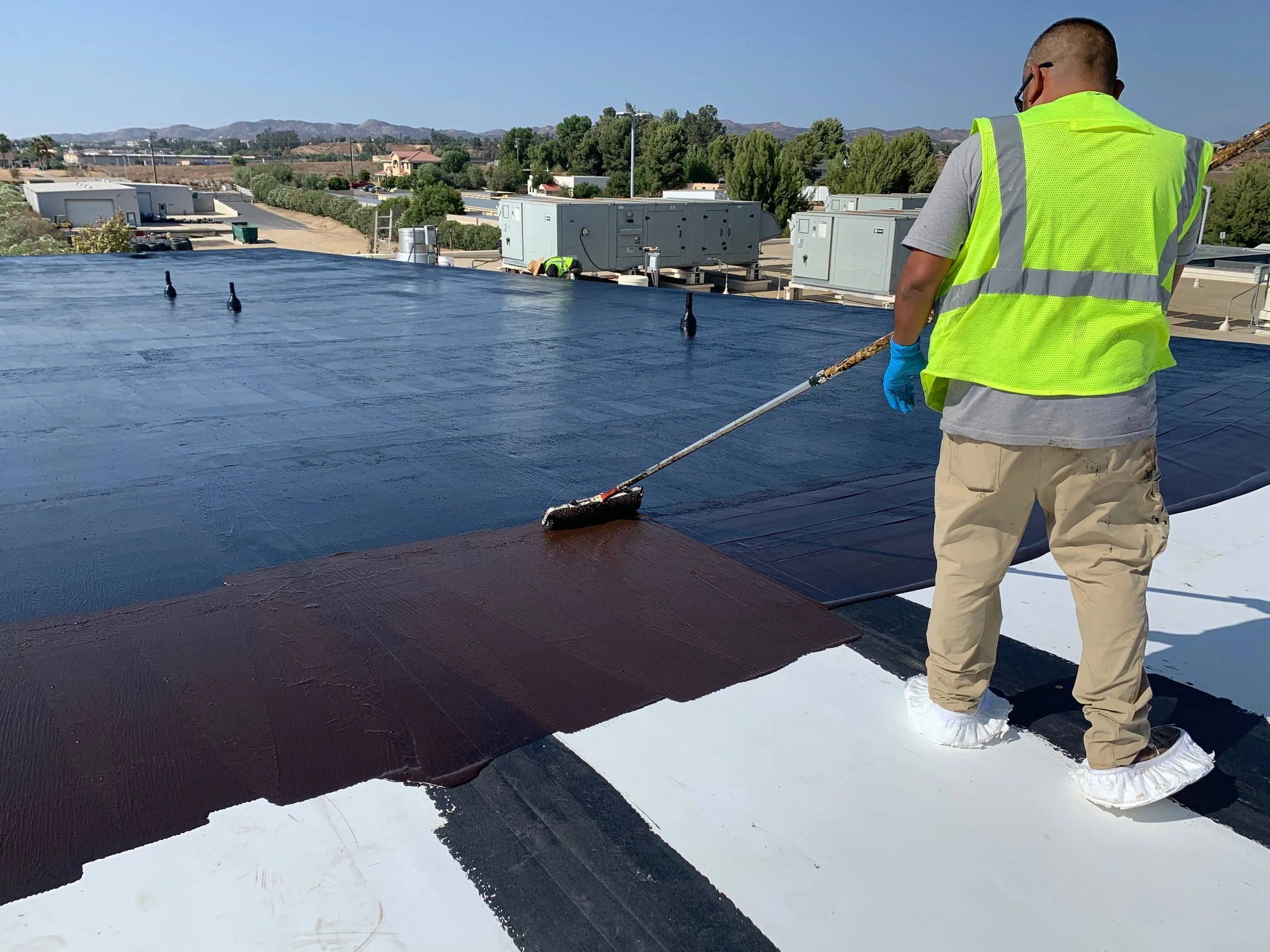
A white TPO or PVC membrane, or a silicone coating applied over an aging built-up roof, drops rooftop surface temperature by a wide margin compared to dark asphalt or an aged, oxidized membrane. On a plant that's already running hot from tooling and molding equipment, that reduction in solar gain through the roof deck is one of the few HVAC-load reductions a facility can make without touching the process equipment itself.
We size that decision against the building, not against a brochure number. A single-story warehouse bay with minimal process heat gets a different recommendation than a molding floor running three shifts, where interior heat load already dominates and the roof's job is mostly to stop adding to it.
Insulation and Vapor Control for a Plant That Runs Through Lake-Effect Winters
Erie sits inside one of the heaviest lake-effect snowbelts in the country, and a manufacturing roof here has to do two jobs that pull in opposite directions: hold enough R-value to keep heating costs down through a long, wet winter, and manage interior humidity from process equipment without trapping condensation inside the insulation.
Plants running wash-down processes, plating lines, or high-humidity molding operations need a vapor retarder detailed correctly under the insulation rather than insulation simply stacked on top of the deck. Get that wrong and moisture gets trapped in the roof assembly, where it quietly destroys R-value and rusts steel deck from underneath before anyone sees a stain on the ceiling.
Reroofs on older Erie-area plants are also where we most often find insulation that was never upgraded past what code required decades ago. Adding board insulation during a recover or tear-off is usually the single biggest utility-cost lever available on a manufacturing building, ahead of anything done to the membrane itself.
A working industrial roof assessment on a plant like this generally covers:
- Membrane condition and remaining service life by roof zone
- Rooftop unit curbs, ductwork penetrations, and exhaust stack flashing
- Skylights, smoke vents, and fall-protection anchor points
- Insulation R-value and moisture content by core sample
- Drainage capacity against current lake-effect snow load data
- Expansion joint condition on older built-up sections
Scheduling Reroofs and Tear-Offs Around Production Lines That Don't Stop
A locomotive assembly line or an injection molding floor doesn't pause for a roofing crew. We plan tear-off and recover work in sections tied to shift schedules, and we sequence dry-in so no more roof deck is open at the end of a shift than we can weather-seal before the crew leaves for the day.
Late fall is the tightest window in Erie. Once lake-effect squalls start rolling off the water, usually by mid-November, open tear-off work on a large industrial roof stops being an option. Plant managers who want a reroof done before winter need to start that conversation by late summer, not October.
Questions Erie Manufacturers Ask Us Most
Can you reroof one section of a plant without shutting the rest down?
Yes, and on a facility the size of a locomotive plant or a large molding operation, that's usually the only realistic way to do it. We zone the roof and phase the work around what's operating underneath each section.
How much can reflective roofing actually reduce cooling costs on a hot production floor?
It varies by building, insulation level, and how much of the cooling load comes from process equipment versus solar gain. We'll walk the roof and the mechanical drawings before giving a number specific to your plant rather than a generic industry figure.
Do you work on plants with active plating, wash-down, or high-humidity processes?
Yes. Those buildings need vapor retarder detailing done correctly, and we design the assembly around the interior humidity load in addition to the exterior climate.
What's the realistic season for a large industrial tear-off in Erie?
Late spring through early fall, before lake-effect snow becomes a regular event. We can do emergency and interior work through winter, but full tear-offs need dry weather windows.
Do you handle roofs that already have multiple patch repairs on them?
Yes. Older Erie manufacturing roofs often carry decades of patches from different contractors. We assess the whole assembly, including what's underneath the patches, before recommending recover versus full replacement.
Ready to review the roof scope?