-
PVC Roof Systems in Erie, PA
PVC Membrane for Chemical and Grease Exposure in Erie
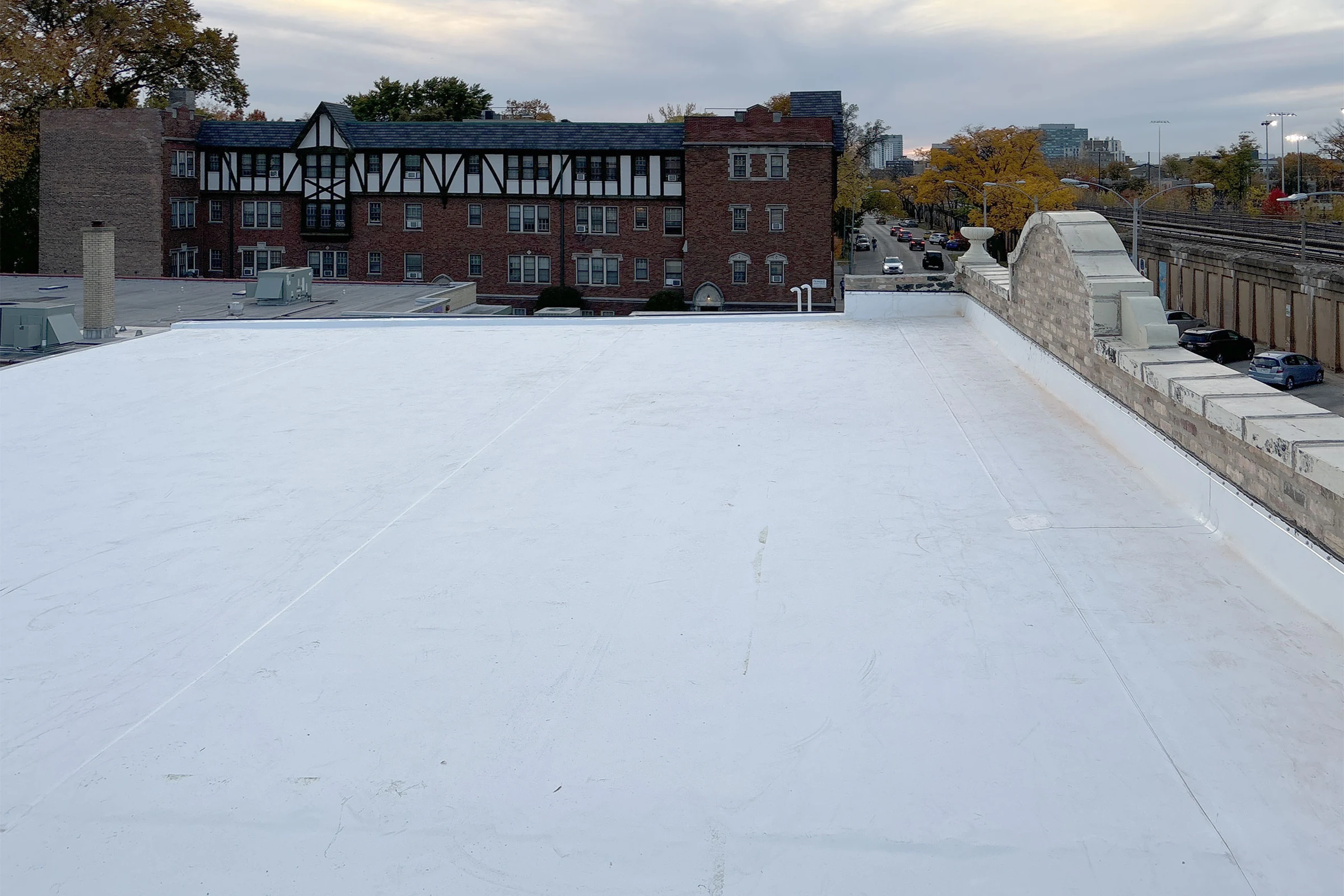
PVC earns its place on Erie roofs at buildings where chemical or grease exposure rules out a rubber membrane, extrusion and injection-molding plants in the plastics corridor, food-service exhaust on restaurant roofs, and facilities with rooftop chemical storage or venting. Its heat-welded seams also happen to perform well through the freeze-thaw cycling that defines an Erie winter, which makes it a dual-purpose choice rather than a niche one.
Why Chemical Resistance Drives the Decision
Plasticizers, oils, and airborne process residue from manufacturing exhaust can degrade EPDM's rubber composition and, over time, soften or discolor some TPO formulations depending on the specific compound and exposure. PVC's chemistry resists that kind of degradation better than either alternative, which is why we default to it for buildings near extrusion lines, coating operations, or any rooftop with vents carrying process exhaust rather than plain HVAC air.
Restaurant and food-service roofs share a version of the same problem: grease-laden exhaust from kitchen hoods settles on the roof surface near the vent, and over years that residue can attack a membrane that isn't formulated to resist it. We flag grease exposure zones on any roof survey and route PVC recommendations specifically to buildings where that exposure is ongoing rather than incidental.
Cost is the honest counterpoint to all of this. PVC membrane generally carries a higher material price than EPDM or standard TPO, and we don't recommend it reflexively. A building without meaningful chemical or grease exposure rarely needs to pay that premium, and we say so directly rather than upselling a membrane family the roof doesn't require.
Heat-Welded Seams in a Cold Install Season
PVC seams are hot-air welded, similar in principle to TPO, and that welding process is sensitive to ambient temperature the same way. Erie's install season narrows once lake-effect snow starts arriving, so scheduling a PVC reroof means watching the forecast closely and staging material and welders to keep sheet temperature in the workable range rather than fighting a falling thermometer mid-install.
Once welded, PVC seams are among the most consistently strong bonds available in single-ply roofing, which matters on a manufacturing building where seam failure carries more risk than a simple leak, it can mean process exhaust or moisture reaching equipment below the deck that can't tolerate water intrusion.
Freeze-Thaw Movement at Laps and Flashings
Every membrane experiences some expansion and contraction as temperatures swing, and Erie sees that swing repeatedly through a winter as lake-effect systems move through and temperatures bounce back toward the melting point between events. PVC's heat-welded laps handle that cyclical movement well because the weld fuses the two sheets into essentially one material rather than relying on an adhesive bond that can fatigue over years of flexing.
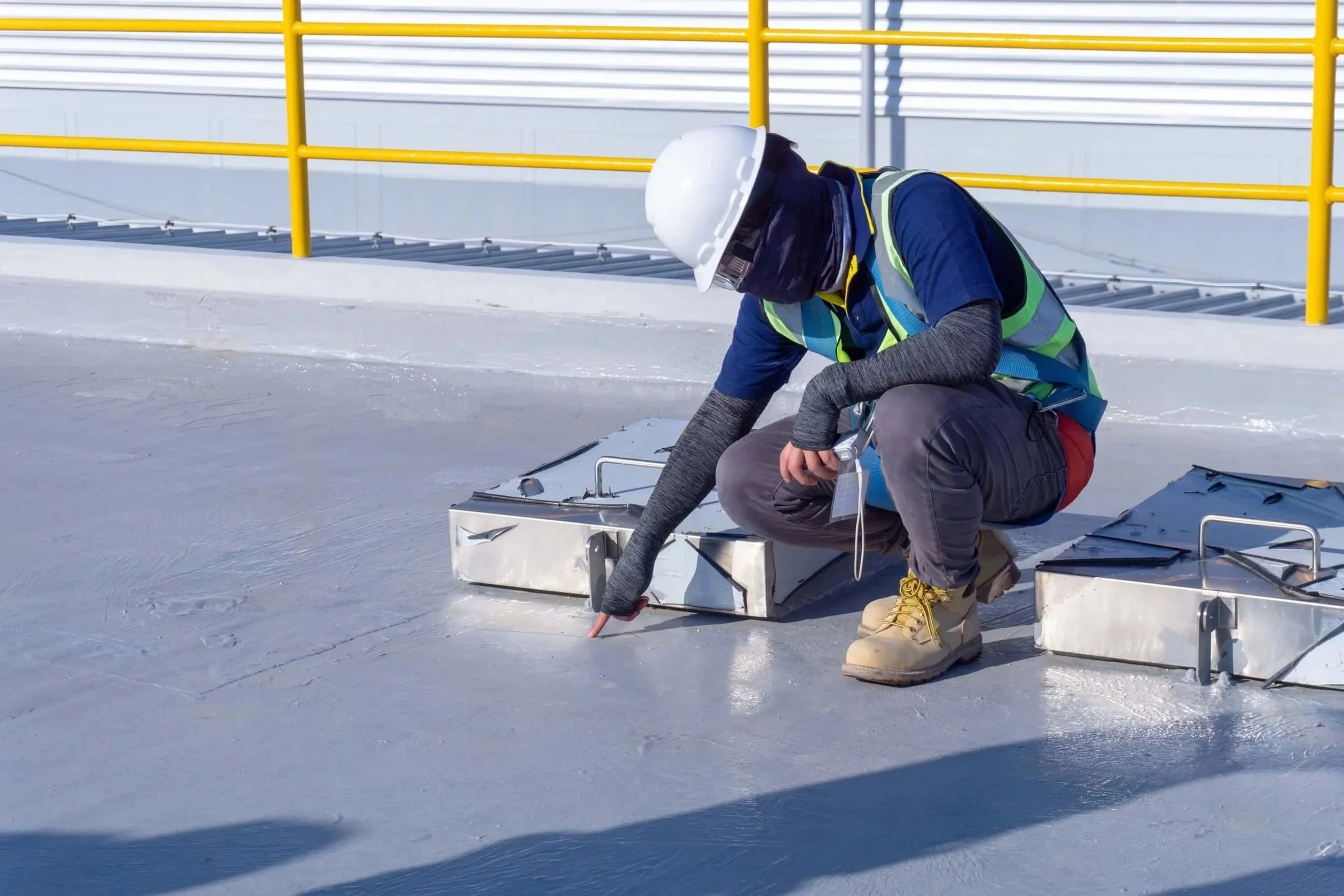
Flashings at curbs, pipe penetrations, and parapets get the same welded treatment, and we probe-test every one of those transitions after installation specifically because a flashing failure is harder to spot visually than a field seam issue until water has already tracked into the building.
Rooftop Equipment and Vent Detailing
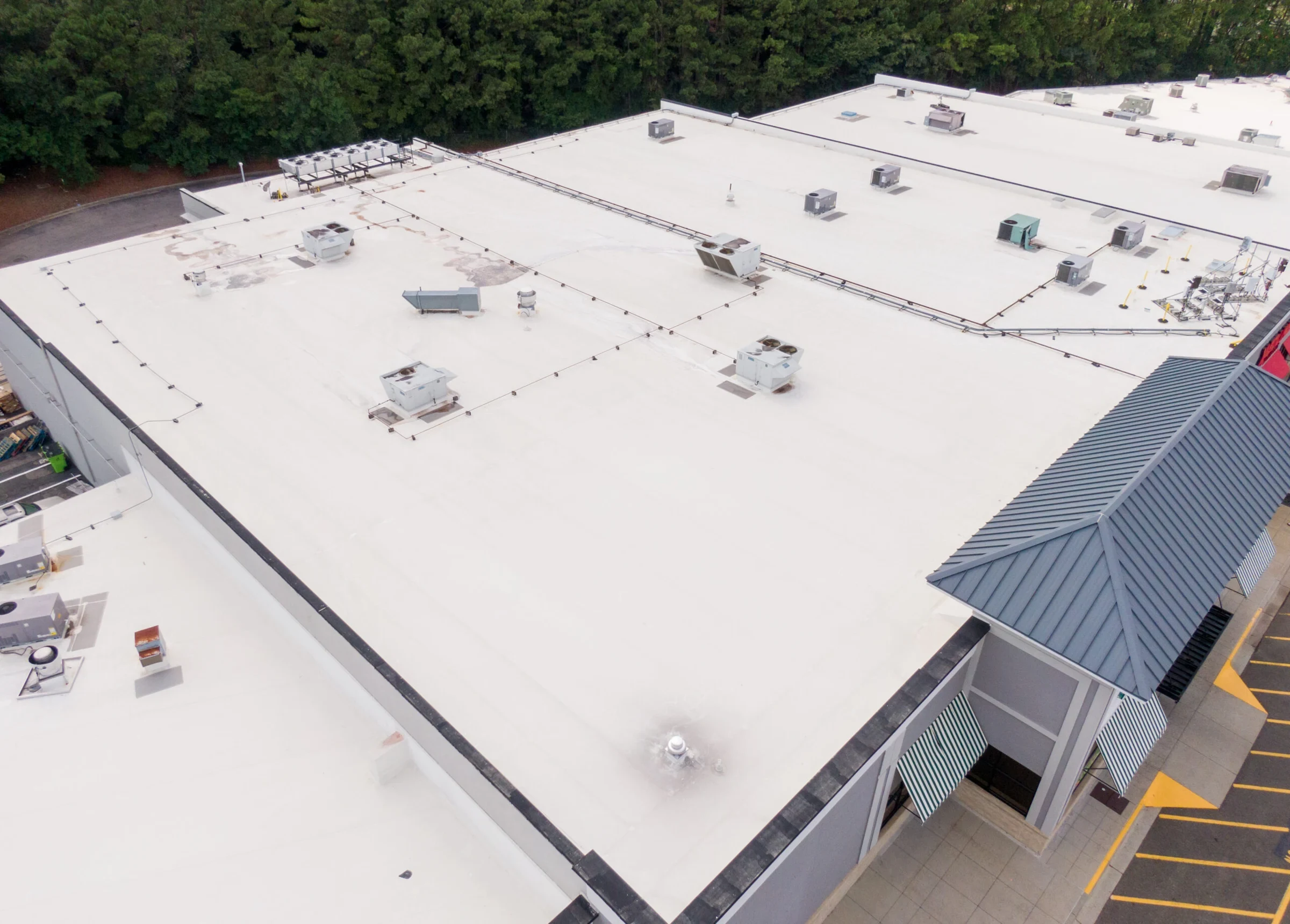
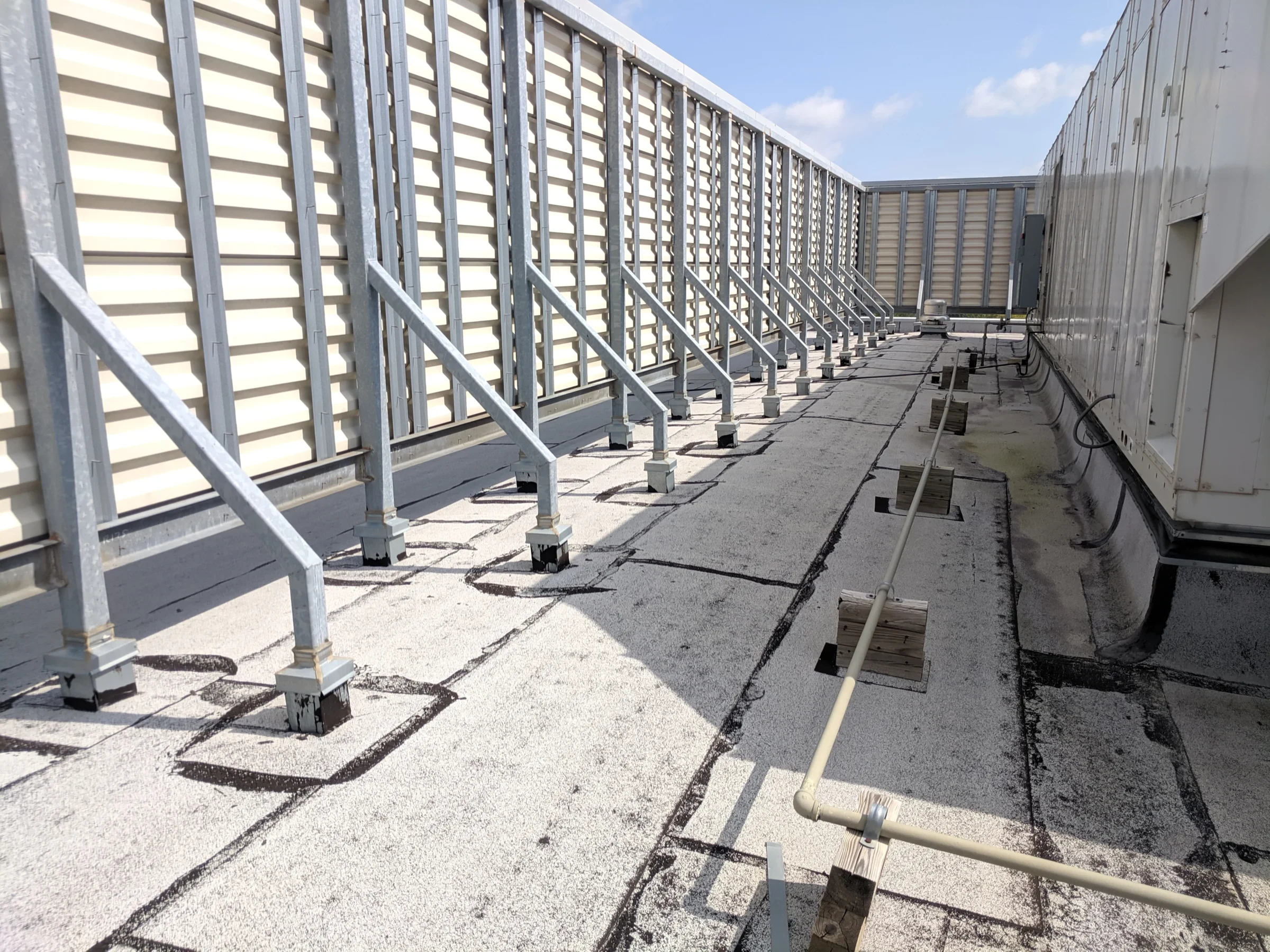
Buildings that justify PVC in the first place, manufacturing plants, restaurants, facilities with process venting, tend to have more complex rooftop equipment layouts than a plain office building. Exhaust fans, scrubbers, ductwork penetrations, and sometimes secondary containment curbs around chemical storage all add detailing work beyond a standard field installation.
- Exhaust and process vent penetrations, checked for grease or chemical staining
- Curb flashing integrity at rooftop fans and equipment pads
- Secondary containment detailing around any rooftop chemical storage
- Seam weld consistency near high-traffic maintenance access points
- Drain capacity given the building's process water or wash-down needs
- Membrane condition directly downwind of any grease-laden exhaust stack
Getting that detailing right up front costs less than revisiting it later, since most of those items sit in areas that are difficult to access again without disrupting operations below.
Insulation and Vapor Control Under Process Roofs
Manufacturing buildings sometimes run interior humidity or process heat levels well outside a typical office range, and that changes how insulation and vapor retarders need to be detailed under the membrane. A vapor retarder placed incorrectly on a building with elevated interior humidity can trap moisture in the insulation layer, which shows up eventually as reduced R-value and, in a bad case, as ice formation within the roof assembly during an Erie winter.
We ask about interior process conditions before finalizing an insulation and vapor package on any PVC project, because the roof assembly has to answer to what's happening below the deck, not merely the weather above it.
Polyisocyanurate is the common choice under PVC, and we check its condition on any recover project through core cuts rather than assuming it performs to its original rated value after years in service. A board that has taken on even modest moisture loses R-value quietly, long before that loss shows up as an obvious problem on a utility bill.
Questions on PVC Roofing in Erie
Is PVC only necessary for manufacturing buildings?
No, though that's where it's most clearly justified. Restaurant roofs with heavy grease exhaust and any building with rooftop chemical storage are also strong candidates.
Does PVC cost meaningfully more than TPO?
Material cost tends to run higher, but on a building with real chemical or grease exposure, the extended service life usually offsets that difference compared to a membrane that degrades under the same conditions.
Can PVC be installed over an existing EPDM roof?
Sometimes, but PVC and EPDM are chemically incompatible in direct contact, so any recover over EPDM needs a proper separation layer specified and verified before installation.
How does cold weather affect PVC seam quality?
The same way it affects TPO, welding requires adequate sheet and ambient temperature, so we schedule installs and probe-test every seam to confirm weld quality regardless of season.
Does PVC handle Erie's freeze-thaw cycling well long-term?
Yes, the welded seam construction tends to hold up well against repeated freeze-thaw movement, which is part of why it performs well here independent of its chemical resistance advantages.
Ready to review the roof scope?