-
Black EPDM Roofing in Erie, PA
Black EPDM and the Erie Heat-Gain Trade-Off
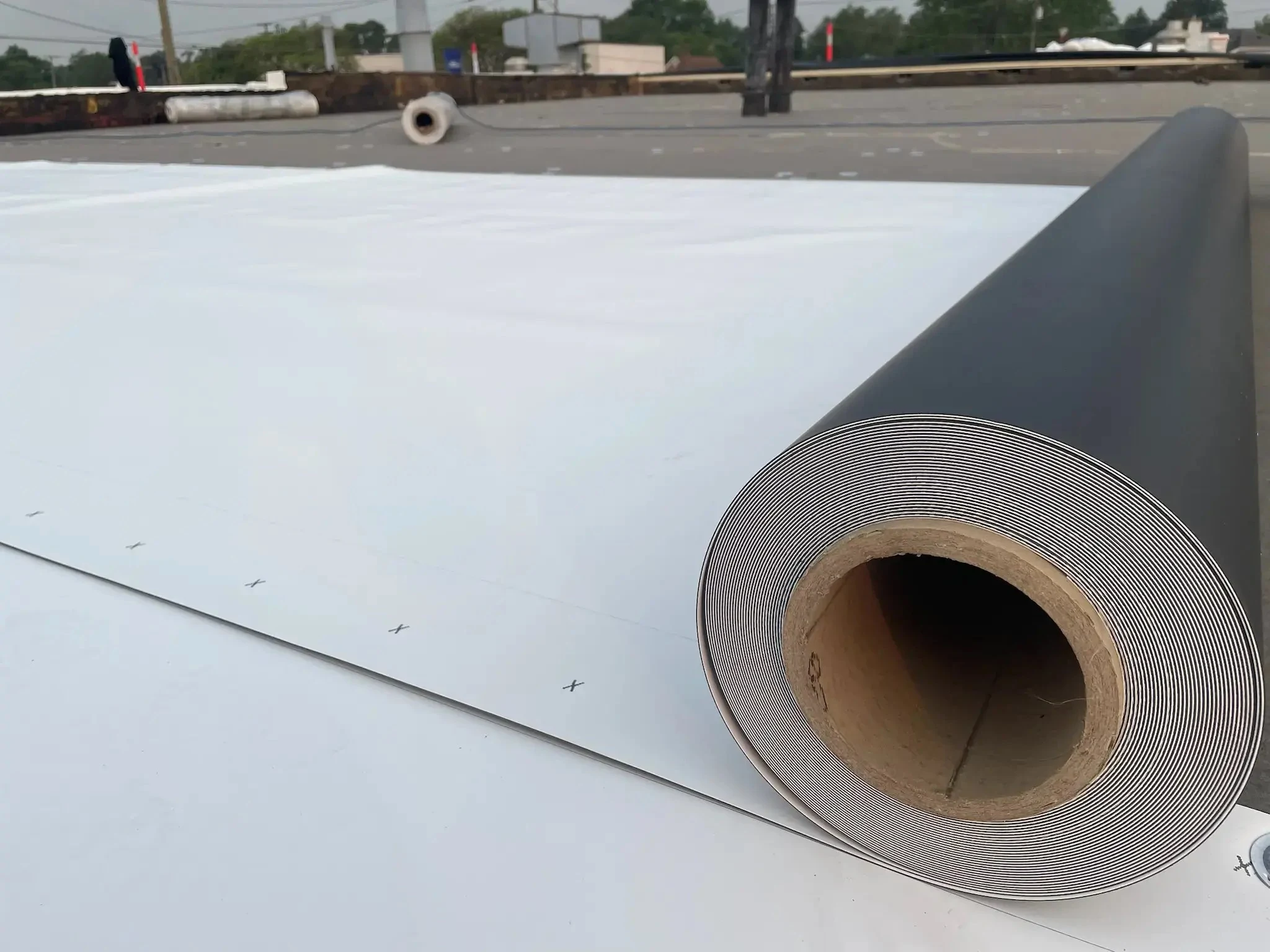
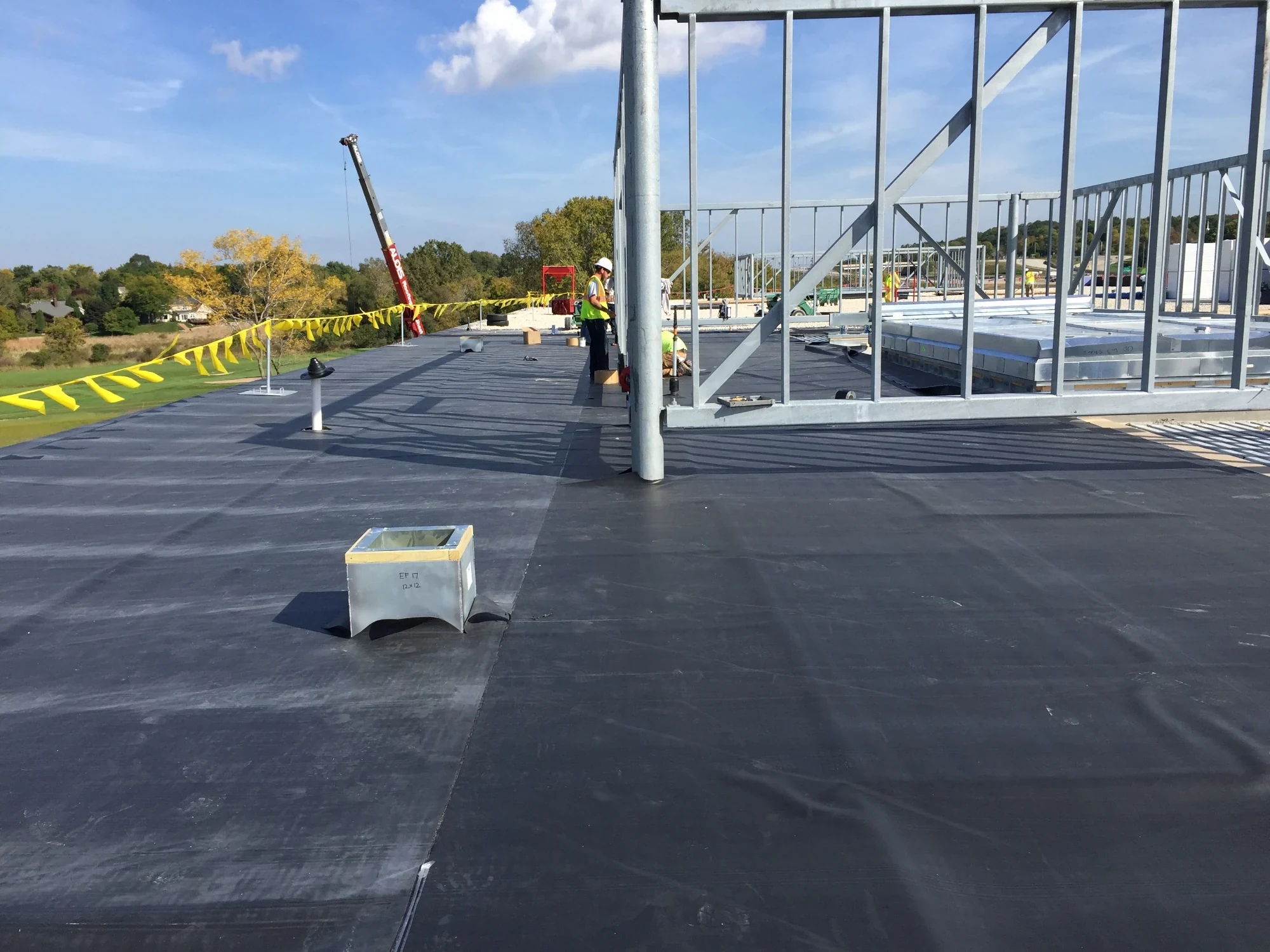
Black EPDM is still common on Erie's older industrial and plastics-sector buildings, and for good reason: it's a proven rubber membrane with a long track record in freeze-thaw climates. The trade-off worth understanding before respec'ing it is that a dark membrane behaves differently than TPO in both directions, faster snow shed in winter, higher cooling load in summer, and that trade-off should be a deliberate decision, not an accident of history.
Why Plastics-Sector Buildings Still Run Black EPDM
Erie's plastics manufacturing corridor, the extrusion and injection-molding plants that give the region its "Plastics Valley" identity, tends to have older, low-slope roofs installed decades ago in EPDM because it was the dominant commercial membrane at the time. A lot of that roofing is still in service, ballasted or mechanically attached, and replacing it wholesale with a different membrane family isn't always the right call when the existing system is sound and simply needs targeted repair or a partial recover.
EPDM's rubber composition also tolerates plasticizer migration and chemical exposure differently than PVC does, which matters near exhaust stacks and rooftop vents on a manufacturing building where some airborne residue is unavoidable. We evaluate that exposure history before recommending whether to stay in the EPDM family or switch systems entirely.
Heat Absorption and Faster Snow Melt
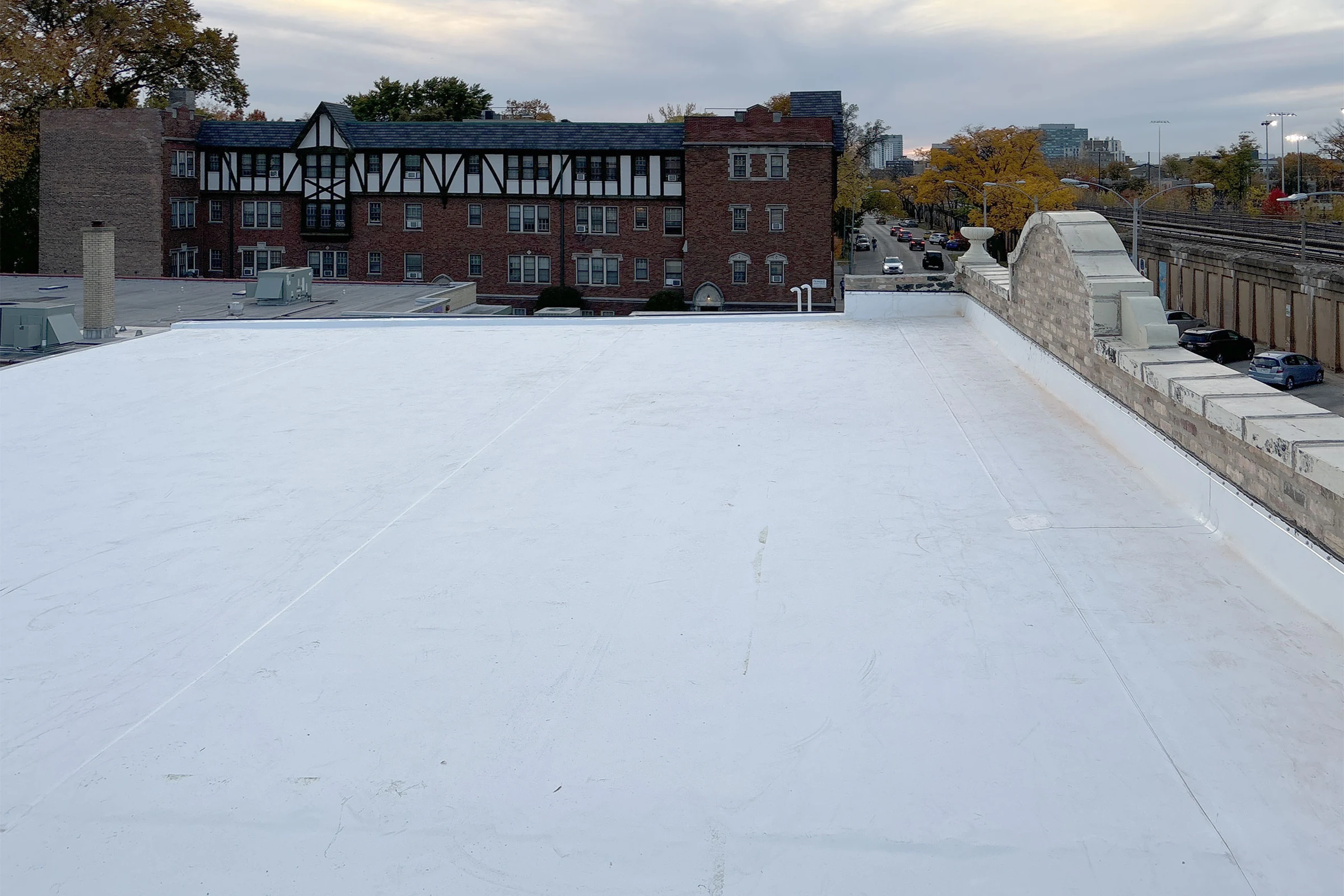
A black membrane absorbs far more solar radiation than a white one, and on a sunny day even in a cold month that heat gain can shed snow and ice faster than a reflective TPO roof sitting right next to it. For a building owner tired of clearing snow off a roof deck, that's a real practical benefit, less standing load, faster runoff once the sun comes out after a lake-effect event.
The same heat absorption becomes a liability in July and August, when a black roof surface can run considerably hotter than ambient air temperature, driving up the cooling load on rooftop package units. We walk owners through that seasonal trade-off honestly rather than treating dark membrane as simply outdated, because for some buildings the winter benefit outweighs the summer cost.
Ballasted vs. Mechanically Attached in Lake Wind
Ballasted EPDM, membrane held down by a layer of round river stone rather than fasteners, was common on Erie's older flat-roof buildings, and it still performs well on a roof with adequate structural capacity. But ballast adds real dead load, and combined with snow accumulation off Lake Erie, that stacked load needs verification against the original structural drawings before we recommend keeping a ballasted system in place through another winter.
On buildings with an open exposure toward the lake, where sustained gusts hit the roof edge with less obstruction than an inland site, mechanically attached EPDM gives a more predictable and verifiable uplift rating. We've moved several older ballasted roofs to mechanical attachment during recover projects specifically because the wind exposure changed once neighboring structures were demolished or the building's use changed.
Seam Performance in a Freeze-Thaw Climate
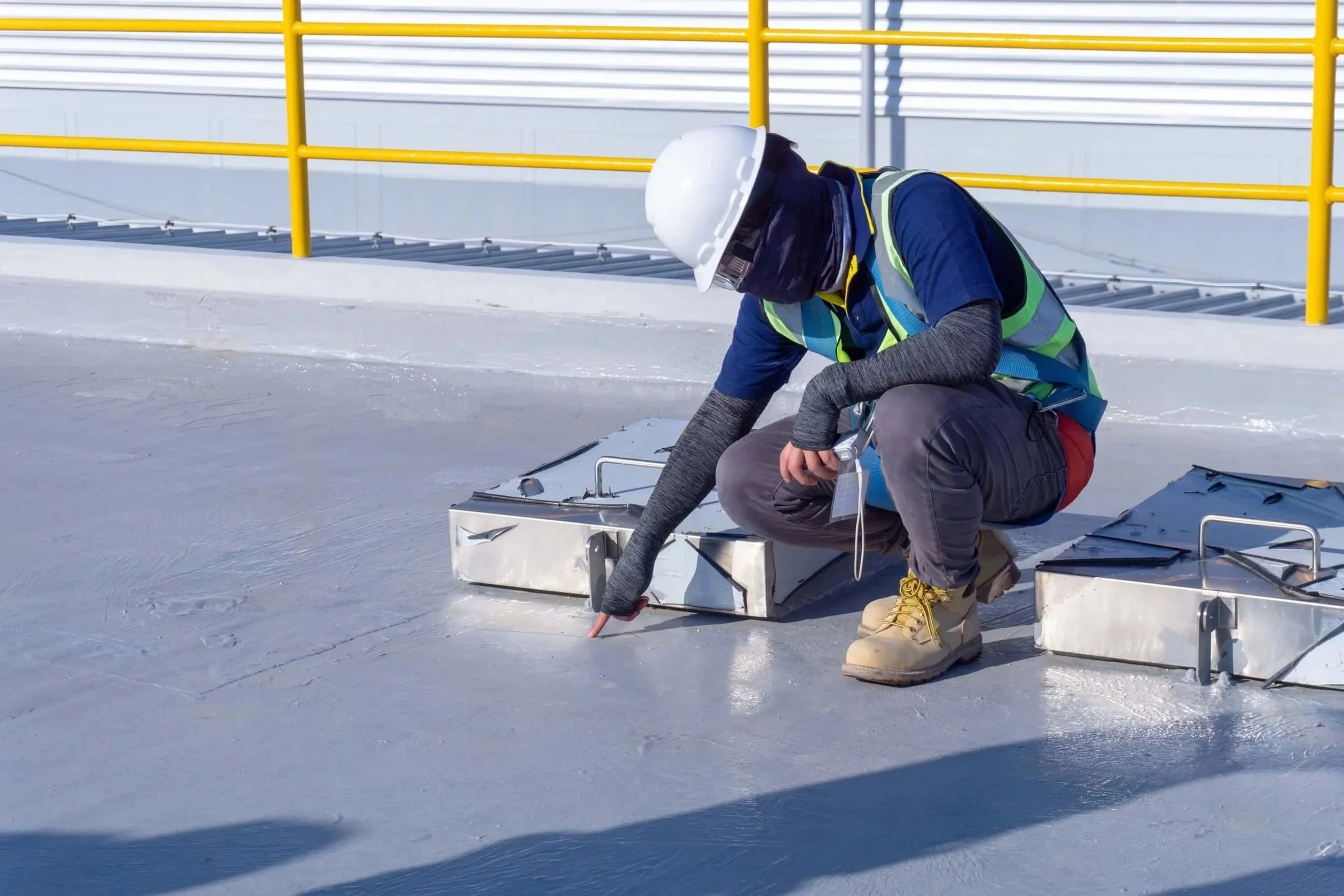
EPDM seams rely on adhesive-bonded splice tape rather than heat welding, and that adhesive bond is sensitive to both application temperature and long-term movement at the lap. Erie's freeze-thaw cycling, dozens of swings through the melting point each winter as lake-effect systems come and go, puts real stress on those laps over years of service.
- Splice tape adhesion at laps, checked for edge lift or open seams
- Fastener plate condition on mechanically attached sections
- Ballast displacement after high-wind events, especially near parapets
- Flashing condition at curbs, drains, and pipe penetrations
- Membrane surface for UV-related shrinkage or cracking on older sheet
- Standing water evidence after a thaw, which points to slope or drain issues
Where splice tape has aged past its service window, a targeted reseal is usually far cheaper than a full recover, but it has to happen before a lap opens far enough to let water track under the membrane during a thaw cycle.
When to Recover Instead of Replace
An EPDM roof with sound insulation, intact seams, and no widespread wet insulation is often a good recover candidate rather than a full tear-off. Recovering keeps the existing insulation's R-value in place and adds a new weather surface without the disruption of a complete replacement, which matters for a manufacturing building that can't easily shut down production areas below the roof deck.
We only recommend that path after core cuts confirm dry insulation and a deck in good condition. Recovering over wet insulation just traps the moisture problem under a new membrane, which costs more to fix later than doing the tear-off correctly the first time.
Frequently Raised Questions on Black EPDM
Does black EPDM really cost more to cool a building than TPO?
Generally yes, on buildings with significant rooftop package unit cooling load in summer. The difference is most noticeable on large, unshaded roof areas.
Is EPDM still a reasonable choice for a new roof in Erie?
It can be, particularly where chemical exposure or a manufacturing environment favors rubber's resistance profile, but we compare it against TPO and PVC options on a case-by-case basis rather than defaulting to it out of habit.
How long do EPDM splice tape seams typically hold up here?
Well-installed seams can last many years, but freeze-thaw cycling means we check them more frequently than we would in a milder climate.
Can a ballasted EPDM roof handle a full Erie winter's snow load?
Only if the original structural design accounted for ballast weight plus snow load together. We verify that combination rather than assume it.
What's the biggest early warning sign an EPDM roof needs attention?
Lifted or open seam edges, usually first visible near a parapet or penetration, before any interior leak ever shows up.
Ready to review the roof scope?